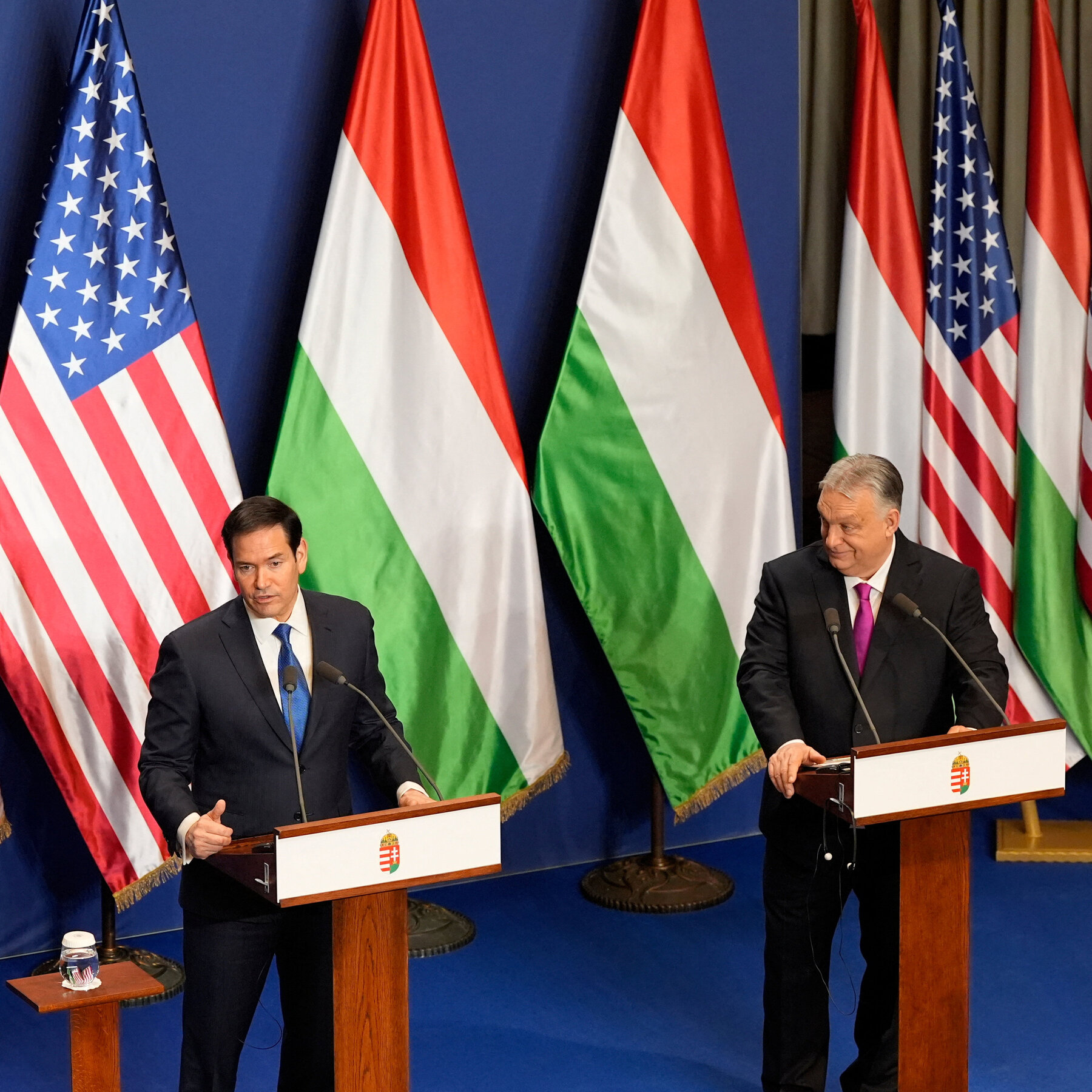
US-HUNGARY RELATIONS—In a surprise move, US Senator Marco Rubio arrived in Budapest, Hungary, to reaffirm the Trump administration’s support for the country’s controversial Prime Minister, Viktor Orban. The visit, which took place in the heart of the Hungarian capital, marked a significant turning point in US-Hungary relations, as the two nations embark on a new era of cooperation. With Orban’s government facing criticism from the European Union and other Western countries over its authoritarian tendencies, the US secretary of state’s statement was seen as a clear endorsement of the Hungarian leader’s vision for an “illiberal state”.
The Catalyst
The Meeting in Budapest
On a crisp winter morning in Budapest, Senator Marco Rubio met with Prime Minister Viktor Orban to discuss the future of US-Hungary relations. The meeting, which lasted for over an hour, was seen as a significant breakthrough in the two nations’ cooperation, as they seek to strengthen their economic and military ties. According to sources close to the talks, the US senator expressed the Trump administration’s “deep commitment” to the success of Orban’s government, which has been at the center of controversy in recent years.
The Context of the Meeting
The meeting between Rubio and Orban took place against the backdrop of growing tensions between Hungary and the European Union. The EU has been critical of Orban’s government, accusing it of undermining democratic values and the rule of law. However, the Trump administration has taken a more nuanced approach, seeking to engage with the Hungarian leader and explore areas of cooperation. The visit was seen as a clear signal that the US is willing to work with Orban, despite the controversy surrounding his government.
The Implication of the Meeting
The implications of the meeting between Rubio and Orban are far-reaching, with potential consequences for the future of US-Hungary relations. The Trump administration’s endorsement of Orban’s government is likely to be seen as a significant boost to the Hungarian leader’s credibility, both domestically and internationally. However, it also raises questions about the US’s commitment to democratic values and the rule of law, as well as its relationship with the European Union.
The Backstory
Rise to Power
Viktor Orban, who has been the Prime Minister of Hungary since 2010, has been a divisive figure in European politics. His government has been accused of undermining democratic values and the rule of law, with critics pointing to its crackdown on civil society, the media, and the judiciary. However, Orban has also been praised for his economic policies, which have helped to boost growth and reduce unemployment in Hungary.
Authoritarian Tendencies
Orban’s government has been criticized for its authoritarian tendencies, with the EU accusing it of undermining the rule of law and democratic values. The Hungarian government has responded by arguing that it is simply trying to protect the country’s sovereignty and cultural identity. The controversy surrounding Orban’s government has sparked a heated debate about the future of democracy in Europe, with some arguing that the EU needs to take a tougher stance against authoritarianism.
The US-Hungary Relationship
The US-Hungary relationship has been complex and often contentious in recent years. While the two nations have a long history of cooperation, the Obama administration was critical of Orban’s government, with the US ambassador to Hungary accusing it of undermining democratic values. However, the Trump administration has taken a more pragmatic approach, seeking to engage with Orban and explore areas of cooperation.
The Financials
Economic Ties
The US and Hungary have significant economic ties, with the two nations trading over $1 billion worth of goods and services each year. The US is one of Hungary’s largest trading partners, with American companies such as General Motors and IBM having a significant presence in the country. However, the economic relationship between the two nations is not without its challenges, with the US seeking to increase its exports to Hungary and reduce its trade deficit.
Investment Opportunities
Hungary has been seeking to attract more foreign investment, particularly in the areas of technology and manufacturing. The country has a highly skilled workforce and a favorable business environment, making it an attractive destination for American companies. The Trump administration’s endorsement of Orban’s government is likely to boost investor confidence, with US companies potentially looking to expand their operations in Hungary.
Energy Cooperation
The US and Hungary have also been exploring opportunities for energy cooperation, with the two nations seeking to reduce their dependence on Russian energy imports. The US has been promoting the development of liquefied natural gas (LNG) terminals in Hungary, which would allow the country to import American gas and reduce its reliance on Russian supplies.
The Players
Marco Rubio
Marco Rubio, the US senator from Florida, has been a key player in the Trump administration’s efforts to engage with Orban’s government. Rubio, who has been a vocal critic of authoritarianism, has taken a pragmatic approach to the US-Hungary relationship, seeking to find areas of cooperation while also promoting democratic values. The senator’s visit to Budapest was seen as a significant breakthrough in the two nations’ cooperation, with Rubio expressing the Trump administration’s “deep commitment” to the success of Orban’s government.
Viktor Orban
Viktor Orban, the Prime Minister of Hungary, has been a divisive figure in European politics. His government has been accused of undermining democratic values and the rule of law, with critics pointing to its crackdown on civil society, the media, and the judiciary. However, Orban has also been praised for his economic policies, which have helped to boost growth and reduce unemployment in Hungary.
Donald Trump
Donald Trump, the President of the United States, has been a key supporter of Orban’s government, with the two leaders sharing a similar worldview on issues such as immigration and national sovereignty. The Trump administration’s endorsement of Orban’s government is likely to be seen as a significant boost to the Hungarian leader’s credibility, both domestically and internationally.
The Friction
EU Criticism
The European Union has been critical of Orban’s government, accusing it of undermining democratic values and the rule of law. The EU has taken steps to sanction Hungary, including launching an Article 7 procedure, which could potentially lead to the country losing its voting rights in the EU. However, the Trump administration’s endorsement of Orban’s government is likely to reduce the pressure on Hungary, with the US seeking to engage with the country rather than isolate it.
Domestic Opposition
Orban’s government has also faced domestic opposition, with critics accusing it of undermining democratic values and the rule of law. The opposition has been vocal in its criticism of the government, with some calling for Orban’s resignation. However, the Trump administration’s endorsement of Orban’s government is likely to boost the Hungarian leader’s credibility, making it more difficult for the opposition to challenge him.
Regulatory Hurdles
The US-Hungary relationship is also likely to face regulatory hurdles, particularly in the areas of trade and energy cooperation. The US has been seeking to reduce its trade deficit with Hungary, while the EU has been pushing for stricter regulations on energy imports. The Trump administration’s endorsement of Orban’s government is likely to create tensions with the EU, particularly on issues such as energy cooperation and trade.
The Forecast
2027 and Beyond
The future of the US-Hungary relationship is likely to be shaped by a range of factors, including the outcome of the 2024 US presidential election and the EU’s efforts to promote democratic values in Hungary. If the Trump administration’s endorsement of Orban’s government is successful, it could lead to a significant boost in economic cooperation between the two nations, with the US potentially increasing its exports to Hungary and reducing its trade deficit.
Geopolitical Shifts
The US-Hungary relationship is also likely to be shaped by geopolitical shifts in the region, particularly the rise of China and the ongoing conflict in Ukraine. The US has been seeking to promote its interests in the region, while Hungary has been seeking to maintain its independence and sovereignty. The Trump administration’s endorsement of Orban’s government is likely to create tensions with other EU nations, particularly those that are critical of Hungary’s authoritarian tendencies.
Long-Term Consequences
The long-term consequences of the Trump administration’s endorsement of Orban’s government are likely to be significant, with potential implications for the future of democracy in Europe and the US’s relationship with the EU. If the US is seen as promoting authoritarianism and undermining democratic values, it could damage its credibility as a champion of human rights and democracy. On the other hand, if the US is able to promote economic cooperation and democratic values in Hungary, it could create a model for future cooperation with other nations in the region.
