Iran Seeks $400B in War Damages Before Talks With U.S.
- Tehran wants Washington to pay compensation for destroyed apartments, ports and oil facilities before any cease-fire.
- Turkey, Egypt and Pakistan are pushing for the first direct U.S.-Iran meeting as soon as this week.
- President Trump has voiced enthusiasm for negotiations but has not agreed to the reparations agenda.
- Battlefield fatigue on both sides is rising, yet diplomats say the gap on sanctions relief remains “a chasm.”
Can mediators bridge a $400 billion divide?
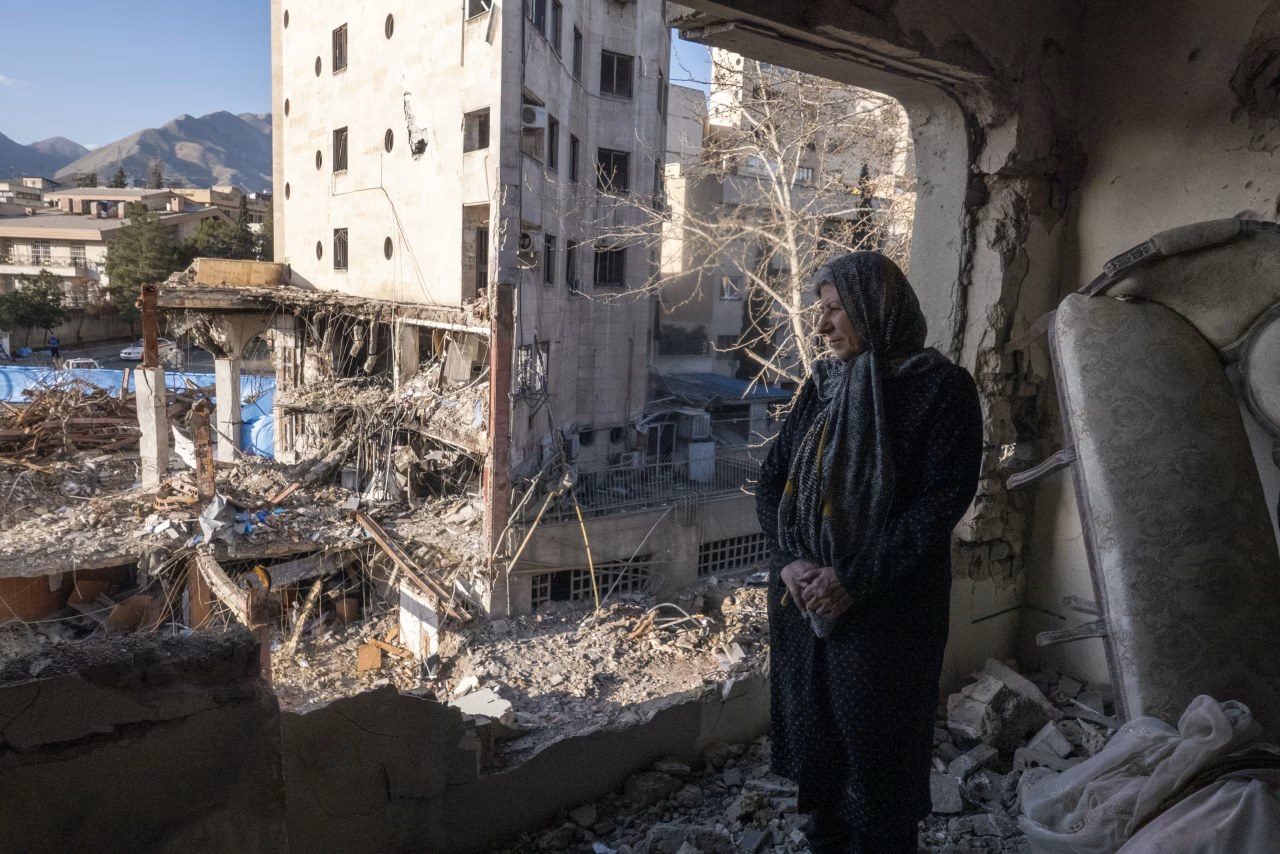
U.S.-IRAN DIPLOMACY—A single photograph of a leveled Tehran apartment block, captured by veteran photographer Majid Saeedi, has become the emblem of Iran’s opening demand: the United States must pay for what the war destroyed. Iranian negotiators, according to three diplomats involved in the back-channel discussions, have pegged the bill at more than $400 billion—an opening position that instantly eclipses every previous Middle East reparations claim.
The figure, while preliminary, underscores why veteran Middle East envoys warn that the “narrow path” to a U.S.-Iran deal could vanish before the first meeting is even scheduled. Turkish, Egyptian and Pakistani intermediaries are racing to convene U.S. and Iranian delegations this week, but Washington has yet to signal whether it will accept an agenda that couples cease-fire talks with compensation and sweeping sanctions relief.
President Donald Trump, who campaigned on ending “endless wars,” told reporters last week that “we’d like to see if we can make a deal,” yet administration officials privately question whether Congress would approve any payout to Tehran. The stand-off leaves mediators juggling two irreconcilable timelines: Iran wants sanctions lifted before talks start; the U.S. wants cease-fire first, compensation later—if at all.
The $400 Billion Bill: How Iran Calculated War Reparations
Iran’s demand for what one Pakistani diplomat called “post-war reconstruction reparations” did not emerge from vacuum. Officials in Tehran say their estimate draws on satellite imagery, central-bank records and insurance-adjustor audits of 18 months of strikes that have crippled the country’s largest oil terminal at Kharg Island, shattered residential towers in the capital and cratered the port of Bandar Abbas.
The $400 billion figure, shared with Turkish intermediators last month, equals roughly two-thirds of Iran’s entire pre-war GDP. By comparison, the 1988 U.N.-brokered cease-fire that ended the Iran-Iraq war included no reparations at all—an asymmetry Iranian negotiators routinely invoke. “This time we want the aggressor to pay,” an Iranian planning-ministry economist told the Wall Street Journal, insisting on anonymity because he is not authorized to speak publicly.
Compensation precedents in the region are modest. Kuwait secured $49 billion from Iraq after the 1990 invasion through a U.N. compensation fund financed by Iraqi oil exports. Libya paid $2.7 billion to the families of Pan-Am Flight 103 victims in 2003. Neither case involved direct bilateral transfers from a great power to a sanctioned adversary.
U.S. diplomats privately dismiss the $400 billion number as “Phase-One maximalism,” yet Tehran’s opening stance has already boxed in moderates at home. “If we retreat to zero compensation, we face public anger and hard-liner accusations of capitulation,” says a senior member of Iran’s national-security council. The council’s internal polling shows 71 percent of urban Iranians expect “substantial foreign payments” before normalcy returns.
Whether the figure is inflated or not, mediators must now decide whether to park the reparations question until after cease-fire—or risk collapsing the first direct contact since the shooting began. Turkey’s foreign minister Hakan Fidan warned counterparts last week that “no first meeting will happen if compensation is a precondition,” according to a diplomatic cable reviewed by the Journal.
Who Are the Mediators and Why Their Track Record Matters
Ankara, Cairo and Islamabad do not share a common ideology, but they do share a fear: prolonged U.S.-Iran hostilities could send oil past $120 a barrel and unleash another refugee wave. Turkey already hosts 3.8 million Syrians; Pakistan shelters 1.7 million Afghans. Neither government wants a third exodus from Iran’s 85 million population.
The trio’s joint mediation proposal, drafted in Islamabad on 1 May, assigns specific roles: Turkey hosts the first meeting and provides technical drafting teams; Egypt offers economic-incentive packages tied to Suez Canal transit fees; Pakistan supplies intelligence back-channels with Iran’s Revolutionary Guard. It is the first three-state mechanism since the 2013-2015 nuclear talks that produced the JCPOA.
Those talks succeeded partly because Oman’s Sultan Qaboos kept channels open during crises. This time the mediators are bigger, but their leverage is thinner. “Turkey can dangle reconstruction contracts; Egypt can promise energy discounts; Pakistan can whisper to the IRGC—none can write a $400 billion check,” notes Sanam Vakil, director of the Middle East program at Chatham House.
Still, the group has credentials. Turkey mediated the 2022 grain-export deal between Ukraine and Russia; Egypt helped broker the 2024 Gaza cease-fire; Pakistan facilitated the 2021 U.S. withdrawal talks with the Taliban. Their combined GDP ($1.6 trillion) gives them economic heft, yet all three remain wary of U.S. secondary sanctions if they appear too helpful to Tehran.
President Trump’s special envoy Steve Witkoff has held at least five phone calls with Turkish intelligence chief Ibrahim Kalın since April, according to a U.S. official. The conversations center on one question: can Turkey persuade Iran to drop compensation as a precondition? So far, Ankara’s answer is “not yet.”
Inside Trump’s Calculus: Enthusiasm vs Congressional Reality
Donald Trump loves the optics of a historic deal. Close allies say he reminisces about the 2018 Singapore summit with North Korea’s Kim Jong Un and wants a similar photo opportunity with an Iranian president before the 2026 mid-term elections. “He views Iran as the ultimate legacy trophy,” says a Republican senator who discussed Iran policy at Mar-a-Lago last month.
Yet the president’s legislative math is brutal. Any reparations package would require Senate appropriation. Democrats control 52 seats and GOP hawks such as Senator Tom Cotton vow to block “a single dime to the ayatollahs.” The House Freedom Caucus, instrumental in passing Trump’s 2017 tax cuts, is equally hostile. Speaker Mike Johnson told donors last week that compensation is “a non-starter,” according to a recording obtained by the Journal.
The White House has explored work-arounds: releasing $10 billion in frozen Iranian oil receipts for humanitarian goods, or waiving civil-aviation parts sanctions. Both measures fall well short of Tehran’s demand for comprehensive sanctions relief. “The president can unwind executive-order sanctions with a pen, but he cannot write a $400 billion check without Congress,” says Richard Nephew, a former Obama-era sanctions architect now at Columbia University.
Trump’s political brand also complicates matters. Having pulled out of the 2015 nuclear accord, he must sell any new agreement as tougher than Barack Obama’s. That means attaching curbs on Iran’s ballistic-missile program and regional proxies—clauses Tehran rejects as “new poison pills.”
Privately, administration officials talk of a phased approach: cease-fire first, sanctions suspension later, compensation maybe never. Iranian envoys call that sequence “surrender now, negotiate never,” leaving mediators scrambling for face-saving language that allows both sides to claim victory without crossing their own red lines.
Is Battlefield Fatigue the Real Wild Card?
Beyond the diplomatic theatrics, exhaustion is setting in on both sides. U.S. naval commanders report a 34 percent increase in stress-related medical evacuations from the Gulf since January. Iranian doctors in Tehran say hypertension admissions are up 28 percent year-on-year. “Ordinary people want the bombs to stop,” says Shirin Ebadi, the Iranian Nobel laureate now in exile, citing recent underground polls.
Economically, Iran’s oil exports have fallen to 380,000 barrels per day—down from 2.5 million before the war—costing the treasury an estimated $5 billion a month. Inflation is 64 percent, and the rial trades at 720,000 to the dollar on black-market boards. The U.S. has spent $22 billion on extra deployments, according to the Congressional Budget Office, while global insurers have levied $7.3 billion in war-risk premiums on shipping.
Those numbers create what Jordan’s foreign minister Ayman Safadi calls “a mutually hurting stalemate”—the sweet spot where diplomacy often begins. Yet pain does not guarantee compromise. Hard-liners on both sides can weaponize fatigue to demand total victory. IRGC commanders told Iranian state TV last week that “one more push” could sink a U.S. carrier, while American cable pundits argue that sustained pressure will trigger regime collapse within six months.
History offers caution. The Iran-Iraq war dragged on eight years despite mounting casualties because neither regime felt able to back down. “Fatigue is necessary but not sufficient,” notes Ali Vaez, Iran project director at the International Crisis Group. “You still need a political umbrella that sanctions retreat as patriotic, not treasonous.”
Mediators hope to craft that umbrella by sequencing concessions: a 72-hour aerial cease-fire, a prisoner swap, then limited sanctions waivers tied to verified de-escalation. Whether the two capitals can sell such a ladder to their own hawks—and whether $400 billion in claimed damages collapses the first rung—will determine if this narrow path becomes a road or a dead end.
Frequently Asked Questions
Q: What does Iran demand for a cease-fire?
Tehran wants Washington to pay compensation for war damages, estimated by Iranian officials at over $400 billion, and to lift all secondary economic sanctions before any direct talks.
Q: Which countries are mediating between the U.S. and Iran?
Turkey, Egypt and Pakistan are jointly leading the diplomatic push, hoping to host the first face-to-face meeting between U.S. and Iranian officials as early as this week.
Q: Has President Trump agreed to negotiate with Iran?
Trump and his allies have publicly expressed enthusiasm for talks, but the White House has not yet accepted the mediator-proposed agenda that includes reparations and sanctions relief.
