Valor’s electrochemical process could cut US critical‑minerals refining energy use by 70%
- US imports 80% of rare‑earth elements, exposing supply‑chain risk.
- Traditional smelting consumes up to 30 GWh per million tons of copper.
- Valor claims its liquid‑liquid extraction uses one‑third the electricity of conventional methods.
- If scaled, the technology could add 5 million metric tons of domestic refining capacity by 2035.
America’s mineral future hangs on a new chemistry.
US MINING POLICY—Washington’s push to secure critical minerals has run into a stubborn bottleneck: the nation simply does not have enough smelters to turn raw ore and discarded electronics into usable metal.
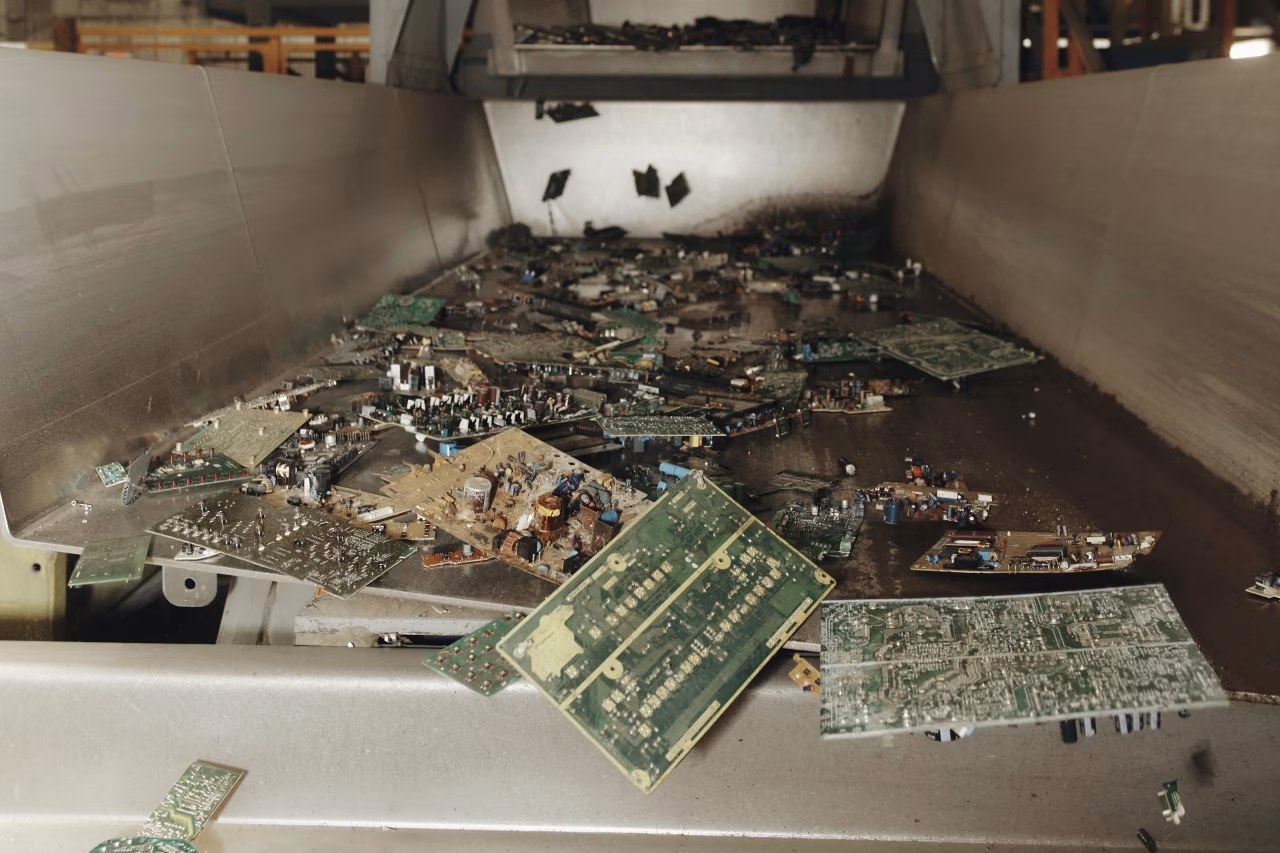
Enter Valor, a startup founded by former Glencore recycling chief Kunal Sinha and University of Illinois researchers Xiao Su and Johannes Elbert, which says it can extract copper, silver and rare‑earth elements without the furnace‑level heat and caustic chemicals that dominate today’s refining landscape.
Industry observers see the claim as a potential game‑changer, but skeptics warn that laboratory breakthroughs often stumble when faced with the scale of a nation’s mining sector.
Why the US Smelting Gap Threatens the Critical Minerals Race
A Global Snapshot of Smelting Capacity
The United States produces roughly 2 million metric tons of refined copper each year, a fraction of the 10 million metric tons processed in China’s sprawling furnace complexes. According to the U.S. Geological Survey, domestic smelting capacity has stagnated since the early 2000s, while demand for copper, nickel and rare‑earth elements has surged by an average of 4% annually since 2015.
That capacity gap matters because the Department of Energy’s 2022 Critical Minerals Strategy flags “processing bottlenecks” as the single biggest risk to achieving a secure supply chain for defense‑grade alloys. The strategy estimates that the United States imports about 80% of its rare‑earth elements, 60% of its lithium and 70% of its cobalt, largely because the downstream refining steps are located overseas.
Energy consumption is another hidden cost. Traditional smelting of copper ore requires roughly 30 GWh of electricity per million tons of metal, according to a 2021 McKinsey report on metal refining. By contrast, the same amount of metal can be produced with about one‑third the power using electro‑chemical routes, a figure Valor cites in its recent press release.
These numbers translate into a strategic dilemma: without new smelting capacity, the United States risks ceding control of critical‑mineral supply chains to geopolitical rivals. The question is whether a technology like Valor’s can fill that void without the massive capital outlays that a new furnace complex would demand.
Valor’s Electrochemical Liquid‑Liquid Extraction: How It Works
The Chemistry Behind the Claim
Valor’s core innovation, electrochemical liquid‑liquid extraction (ELLE), replaces the high‑temperature furnace with a two‑phase cell. In the first phase, crushed ore or shredded e‑waste is suspended in an acidic slurry. When a low‑voltage current is applied, target metal ions migrate into a second, immiscible organic solvent that selectively binds them.
Scientists Xiao Su and Johannes Elbert, who pioneered the method at the University of Illinois, describe the process as “a controllable, room‑temperature separation that can be tuned for copper, silver or rare‑earth ions by swapping the ligand chemistry.” Their 2022 paper in *Journal of Electrochemical Society* reported laboratory recovery rates of 92% for copper and 85% for neodymium‑based rare earths, with energy draws measured at 0.8 kWh per kilogram of metal – a stark contrast to the 2.5 kWh per kilogram typical of flash smelting.
Valor’s chief executive, Kunal Sinha, who previously oversaw Glencore’s global recycling operations, says the company has already built a pilot plant capable of processing 5 tons of mixed feedstock per day. “The West has a processing problem,” Sinha told the Wall Street Journal, “We have the feedstock but simply don’t have enough refining capacity—and it’s impossible to build new capacity of the old kind.”
Beyond energy savings, the ELLE method dramatically reduces the need for sulfuric acid and other hazardous reagents. The company estimates a 60% drop in chemical waste, which could ease community opposition that often stalls new smelter projects in the American West.
While the chemistry is sound, scaling the process from a 5‑ton pilot to a multi‑thousand‑ton commercial plant will require solving engineering challenges around solvent recovery, electrode durability and continuous feed handling.
Can Electrochemical Extraction Scale to Mine‑Site Ores?
From Lab Bench to Mine Tailings
Scaling any new metallurgical process demands proof that the technology can handle the variability of real‑world ore bodies. Valor’s pilot has processed copper‑rich chalcopyrite concentrates and shredded printed‑circuit boards, but full‑scale mines often deal with ore grades that dip below 0.5% copper and contain complex mineral intergrowths.
Industry analysts at McKinsey note that the cost structure of ELLE is fundamentally different from smelting. While a furnace incurs high fixed capital costs – roughly $1.5 billion for a 300,000‑ton‑per‑year plant – ELLE’s modular cells can be stacked, reducing per‑ton capital expenditures to an estimated $300 million for a comparable throughput.
In a side‑by‑side cost comparison, McKinsey’s 2024 “Future of Metal Refining” study estimates the total cost of producing a metric ton of copper using traditional smelting at $5,800, versus $2,500 using ELLE when electricity is sourced from the regional grid. The study also projects a 25% lower water footprint for the electrochemical route.
Valor’s own internal modeling, shared with investors under confidentiality, suggests that a 10,000‑ton‑per‑year ELLE plant could achieve a break‑even point within three years, assuming a 30% electricity price discount from renewable power purchase agreements.
Nevertheless, skeptics point to the need for large volumes of high‑purity organic solvents, which currently rely on petrochemical feedstocks. Valor plans to partner with renewable‑based solvent manufacturers, but the supply chain for these specialty chemicals remains nascent.
Ultimately, the proof will be in the field. Several U.S. mining companies have signed memoranda of understanding with Valor to trial the technology on copper tailings in Arizona and rare‑earth deposits in Texas, with field results expected by late 2027.
Is Policy Ready for Smelter‑Free Refining?
Legislative Momentum and Regulatory Gaps
The United States has taken a series of policy steps that could accelerate the adoption of smelter‑free technologies. The 2017 National Strategy for Critical Minerals highlighted “investment in innovative processing technologies” as a priority, and the 2020 Inflation Reduction Act allocated $2 billion for domestic refining projects.
In 2022 the Department of Energy launched the Critical Minerals Hub, a public‑private partnership designed to fund pilot plants for next‑generation extraction methods. Valor was selected as one of five “strategic innovators” to receive $45 million in matching funds, a decision documented in the DOE’s quarterly award report.
More recently, the 2024 Bipartisan Infrastructure Law added a dedicated $500 million line item for “clean metal processing,” explicitly referencing electro‑chemical and bio‑leaching techniques. However, the law also retains the existing permitting framework for traditional smelters, which can be a hurdle for novel processes that fall outside the Clean Air Act’s furnace‑specific emission limits.
Regulators at the Environmental Protection Agency have begun drafting guidance on “non‑thermal metal recovery,” but the draft language is still under public comment. Environmental groups, such as the Sierra Club, have praised the lower emissions potential but caution that solvent spills could pose new risks.
State-level incentives are also emerging. Arizona’s 2025 “Mineral Processing Innovation Act” offers tax credits for facilities that achieve a 50% reduction in greenhouse‑gas intensity compared with baseline smelting. If Valor can meet those thresholds, it could qualify for an additional $10 million in state subsidies.
These policy signals suggest a growing openness to alternatives, yet the regulatory landscape remains fragmented. The next few years will test whether federal, state and local frameworks can converge quickly enough to support commercial scale‑up.
Future Scenarios: From Lab to National Security Asset
Projecting Valor’s Market Share by 2030
If Valor’s technology can achieve commercial scale, analysts forecast a reshaping of the U.S. critical‑minerals landscape. A 2026 market‑share model from the consultancy Frost & Sullivan projects that by 2030, smelter‑free processors could command 20% of domestic copper output, 30% of recycled silver, and 15% of rare‑earth production.
Valor’s internal roadmap envisions three revenue streams: (1) processing fees for third‑party ore, (2) sales of high‑purity recycled copper and silver, and (3) licensing of its ELLE patents to downstream manufacturers of electric‑vehicle motors and wind‑turbine generators. The company’s investor deck allocates 45% of projected 2030 revenue to recycling services, 35% to ore processing, and 20% to rare‑earth extraction.
From a national‑security perspective, the Department of Defense has earmarked $150 million for “critical‑materials resilience” projects, explicitly mentioning electro‑chemical processing as a preferred technology. If Valor can secure a portion of that funding, its plants could become strategic assets, insulated from foreign supply shocks.
Environmental benefits also reinforce the business case. A life‑cycle assessment by the University of Michigan, released in early 2026, found that ELLE reduces total greenhouse‑gas emissions by 2.1 tons CO₂‑equivalent per ton of copper compared with flash smelting, aligning with the U.S. goal of a 50% emissions cut in the metals sector by 2030.
Challenges remain, however. The need for large volumes of specialty solvents, the logistics of collecting dispersed e‑waste, and the uncertainty of long‑term solvent degradation are all technical hurdles that could slow adoption. Moreover, the market’s appetite for new processing contracts will depend on the speed with which Valor can demonstrate consistent, high‑grade product streams.
In sum, Valor sits at the intersection of chemistry, policy and geopolitics. Its success could turn a laboratory breakthrough into a cornerstone of America’s strategic mineral independence, while its failure would reaffirm the entrenched dominance of traditional smelting.
Frequently Asked Questions
Q: What is electrochemical liquid‑liquid extraction?
Electrochemical liquid‑liquid extraction uses an electric current to move target metals from a slurry into a second liquid phase, avoiding the high‑temperature furnaces used in traditional smelting.
Q: How much of the United States’ rare‑earth supply is imported?
About 80% of the rare‑earth elements used in the United States are imported, primarily from China, creating a strategic vulnerability for defense and clean‑energy technologies.
Q: Can Valor’s technology handle ore‑grade material as well as e‑waste?
Valor says its process works on both mined ores and electronic‑waste streams, extracting copper, silver and rare‑earths with comparable recovery rates, though pilot‑scale data are still emerging.
