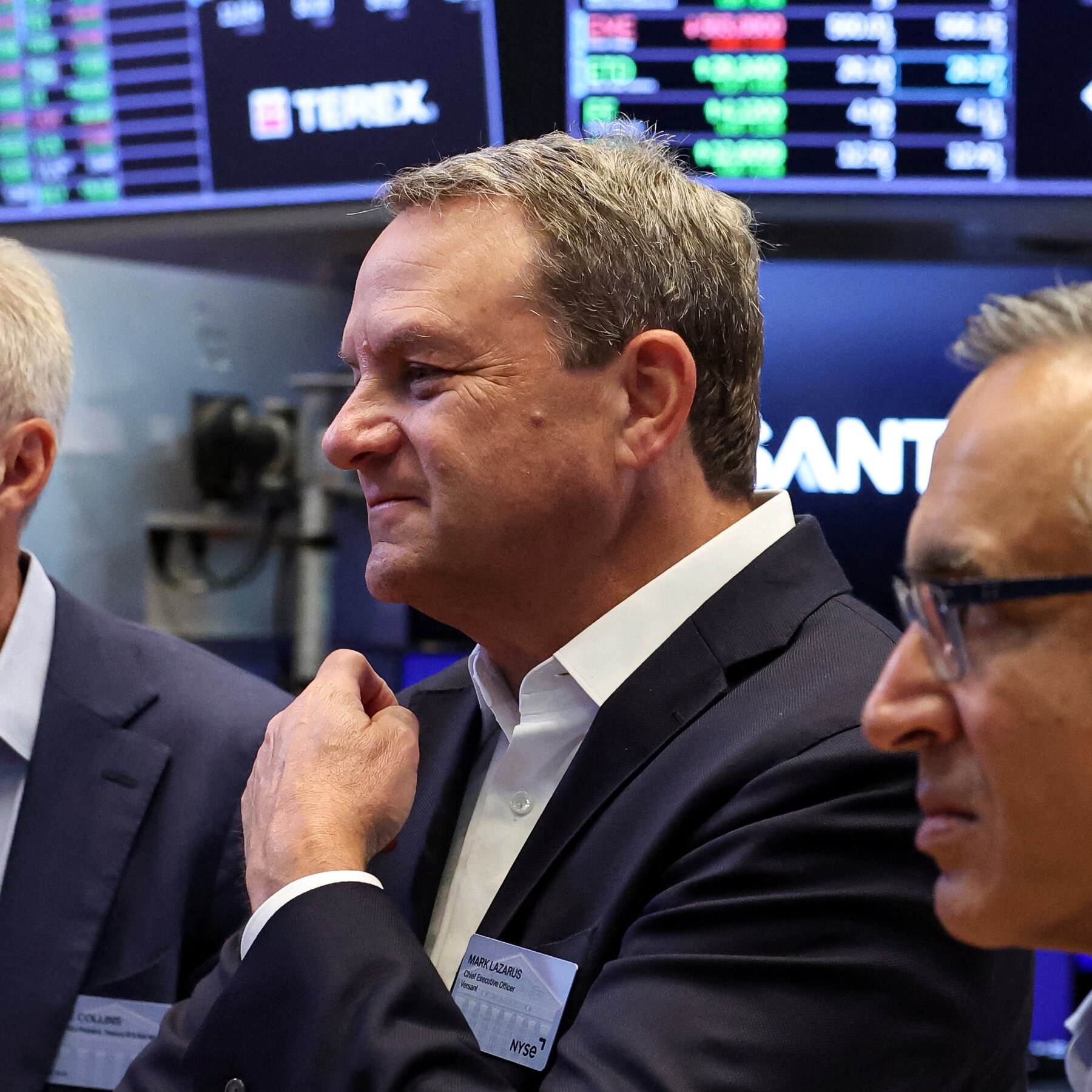
Versant in Talks to Buy Vox Media Podcast Unit, Sources Say
- Versant, owner of CNBC and MS NOW, is negotiating to acquire Vox Media’s entire podcast division.
- The deal would add dozens of shows—from Pivot to Land of the Giants—to Versant’s streaming-centric portfolio.
- Negotiations are advanced but not final; price and structure remain under discussion.
- Move underscores Versant’s strategy to diversify beyond cable TV as cord-cutting accelerates.
Purchase would give Versant a bigger slice of the $2.4 billion U.S. podcast ad market.
VERSANT—Versant, the holding company that controls CNBC and the fast-growing streaming brand MS NOW, is in late-stage talks to purchase Vox Media’s podcast division, according to people briefed on the matter.
The transaction, if completed, would transfer ownership of more than 40 active series—including New York Magazine’s culture hit The Cut and tech show Pivot—into Versant’s expanding media ecosystem.
While financial terms have not been disclosed, industry analysts estimate the portfolio could fetch between $150 million and $200 million based on recent multiples of 6–8× annual revenue. Representatives for both companies declined to comment.
Why Versant Wants Vox’s Podcast Library Now
Versant sees podcasts as the cheapest path to younger, affluent audiences.
Versant’s cable portfolio, anchored by CNBC, still generates more than 60 percent of its revenue from linear carriage fees, a stream that MoffettNathanson expects to shrink 5 percent annually through 2028. Buying Vox’s podcast unit would immediately add 14 million monthly unique listeners, 62 percent of whom are under age 35, according to Vox’s 2025 internal deck reviewed by advertisers.
“Podcasts are the only medium where time-spent is still rising among 18-34s,” says Sarah Foss, chief technology officer at SoundStack and former head of audio at Cox Media Group. “For a legacy operator like Versant, that demographic is gold.”
Vox Media launched its first podcast in 2015 and now produces more than 100 original episodes per week across politics, tech, culture and food. Internal data show the division brought in roughly $55 million in gross ad revenue last year, up 22 percent year-over-year, even as the overall podcast market grew only 12 percent, according to the Interactive Advertising Bureau.
Versant executives believe they can lift that figure above $80 million within two years by inserting dynamic ads—an area where MS NOW’s engineering team already supplies technology to third-party publishers—and by cross-promoting shows on CNBC’s 390 million-subscriber global footprint.
The strategic calculus is simple, says Rich Greenfield, partner at LightShed Partners: “Every hour a consumer spends with a Versant podcast is an hour not spent with Netflix, TikTok or Spotify. Owning that hour is worth real money.”
Yet the window may be narrowing. Major studios including Spotify, Amazon and SiriusXM have already scooped up marquee creators, leaving mid-tier publishers like Vox to compete on volume rather than star power. Versant’s timing suggests it believes scale, not exclusivity, is the surer bet.
Next we examine how the talks unfolded and what hurdles remain before a deal can close.
Inside the Negotiations: Price Tags and Power Dynamics
Vox seeks a premium multiple; Versant wants asset-heavy balance-sheet relief.
Talks began in January when Vox Media CEO Jim Bankoff met Versant’s chair, Jonathan Nelson, at the Consumer Electronics Show in Las Vegas, according to three attendees. Over the following eight weeks, Vox’s bankers at J.P. Morgan circulated a 72-page pitch book arguing the podcast unit deserves an 8× forward-revenue valuation, or about $200 million, citing Spotify’s 2019 purchase of The Ringer for roughly $250 million at a similar multiple.
Versant countered that podcast advertising is cyclical and that the macro climate for digital ad spend has cooled. Internal models reviewed by board members value the unit closer to $140 million, people familiar said. The gap—roughly $60 million—remains unresolved.
Complicating matters, Vox Media is simultaneously negotiating to refinance $250 million in 8.5 percent senior notes due 2027. Off-loading the podcast division would remove roughly 17 percent of consolidated EBITDA, potentially making new debt costlier unless proceeds are used to de-lever, according to Fitch Ratings analyst Sharad Jain.
Versant, for its part, has raised $400 million in Series C funding for MS NOW since 2023, giving it ample liquidity, but executives want to preserve cash for international sports rights. One structure under discussion would involve a cash-and-stock deal that lets Vox retain a minority 15 percent stake, aligning incentives for continued growth.
“The real currency here isn’t just dollars, it’s data,” notes media-tech banker Terri McPhillips, managing director at Solomon Partners. “Versant wants Vox’s listener profiles; Vox wants Versant’s distribution.”
Neither side has signed a letter of intent, and talks could still collapse. If they do, Vox has quietly sounded out Sony Music Entertainment and Acast as fallback buyers, according to two people briefed on those conversations.
Up next: how Versant would fold the podcasts into its existing streaming and TV infrastructure.
What Happens to Vox’s Hit Shows If Versant Wins?
Vox’s editorial staff have been kept in the dark, triggering anxiety inside New York Magazine’s audio team, which produces flagship shows like On With Kara Swisher and The Cut podcast. Employees received no all-hands memo after trade publication Axios first reported talks on March 23, according to a senior producer who requested anonymity.
Versant’s acquisition playbook typically leaves newsroom operations untouched. When it bought tech site Protocol in 2022, all 70 staffers retained their jobs and the site continued under CNBC’s digital umbrella. Still, podcast ad teams could see consolidation. Vox Media employs 28 full-time audio sales reps; Versant’s MS NOW uses automated programmatic tools that require fewer personnel.
One upside: Versant’s existing relationship with major brands such as E-Trade, Fidelity and Salesforce could fill inventory that Vox historically sold through programmatic exchanges at lower CPMs. CNBC’s sales force commands $80–$100 CPMs for host-read spots, double Vox’s blended rate, according to Standard Media Index data.
“The fear is that CNBC’s culture of 5 a.m. call times collides with New York Mag’s ethos of long-form narrative,” says Gabriel Snyder, former editor-in-chief of The Atlantic and a New York Magazine alum. “The hope is deeper pockets.”
Vox Media would keep its print and digital journalism under any scenario. The transaction would involve only the podcast subsidiary, leaving brands like Vulture, The Strategist and Curbed unaffected.
Next we explore how the deal could reshape the competitive podcast landscape and shift advertising dollars away from Spotify and YouTube.
Could Regulators Block the Deal?
Antitrust lawyers see few red flags, but Democratic lawmakers are watching.
Versant controls less than 1 percent of total U.S. podcast listening hours, according to Edison Research. Even after adding Vox’s 0.4 percent share, the combined entity would rank outside the top five publishers, well behind Spotify (28 percent), YouTube (22 percent) and Apple (16 percent). That market fragmentation reduces regulatory risk, says former DOJ antitrust counsel John Newman, now a law professor at the University of Miami.
Still, the Biden administration has taken a tougher stance on vertical integration. The Federal Trade Commission is already probing Amazon’s $1.7 billion purchase of podcast network Wondery. If Versant bundles podcasts with CNBC’s financial data to sell subscription tiers, the FTC could scrutinize whether rivals are disadvantaged, Newman adds.
State attorneys general have shown interest in local media consolidation. New York AG Letitia James’s office queried both parties last week, requesting internal documents on how the sale would affect jobs in Manhattan, where Vox Media employs 220 podcast staffers. Versant’s New York headcount is 1,100, meaning any layoffs could become a political flashpoint.
Under the Hart-Scott-Rodino Act, deals above $111 million trigger federal review. Versant’s likely purchase price exceeds that threshold, forcing a 30-day review. Yet because neither company competes head-to-head, most antitrust practitioners expect unconditional clearance within that window.
“This is a classic content acquisition, not a market grab,” says Diana Moss, director of the American Antitrust Institute. “Absent price collusion or foreclosure of rivals, enforcers have little basis to intervene.”
Final chapter: what the takeover signals for the next wave of media M&A as streaming giants hunt for scale.
What a Versant Victory Would Mean for Media Consolidation
If Versant closes the acquisition, expect a flurry of copycat deals. Private-equity giants KKR and Blackstone have both raised billion-dollar content funds targeting mid-tier publishers with evergreen libraries. iHeartMedia, which already owns 860 podcasts, has told investors it wants to add niche business shows to complement its mass-market slate.
The bigger picture is the blurring of lines between television and on-demand audio. NBCUniversal’s TODAY All Day streaming channel now simulcasts podcast segments on Peacock, while CNN’s Audio unit repurposes TV segments for its 1.3 million daily podcast downloads. Versant’s move accelerates that convergence.
For advertisers, consolidation could raise CPMs as dominant players restrict inventory. Media agency Magna forecasts podcast ad rates will rise 9 percent in 2026 if the top five publishers control more than 70 percent of impressions. That inflation benefits Versant’s bottom line but squeezes mid-market brands.
“We’re heading toward a world where every TV segment becomes a podcast and every podcast becomes a TV segment,” says Tom Webster, partner at Sounds Profitable. “The companies that own both pipes will win.”
Versant’s playbook—acquire, integrate, cross-monetize—has already doubled MS NOW’s revenue to $180 million in 24 months. Replicating that formula with Vox’s podcasts could lift Versant’s total audio revenue past $250 million, making it a top-10 U.S. podcast publisher for the first time.
Whether listeners—or journalists—benefit from that scale remains an open question. What is certain: the era of niche podcast independents is giving way to conglomerate control faster than most predicted.
Frequently Asked Questions
Q: What podcasts does Vox Media produce?
Vox Media’s podcast division includes titles from New York Magazine, The Verge, Eater, Recode and the Vox newsroom, such as Pivot, Land of the Giants and The Cut.
Q: How large is Versant’s current media footprint?
Versant wholly owns CNBC and the streaming business MS NOW, reaching more than 400 million homes worldwide and producing 20 hours of live programming daily across platforms.
Q: Why are legacy media companies buying podcast assets?
Podcasts deliver younger, on-demand audiences, higher ad CPMs than cable, and lower production costs, helping diversified media firms offset linear-TV subscriber losses.
