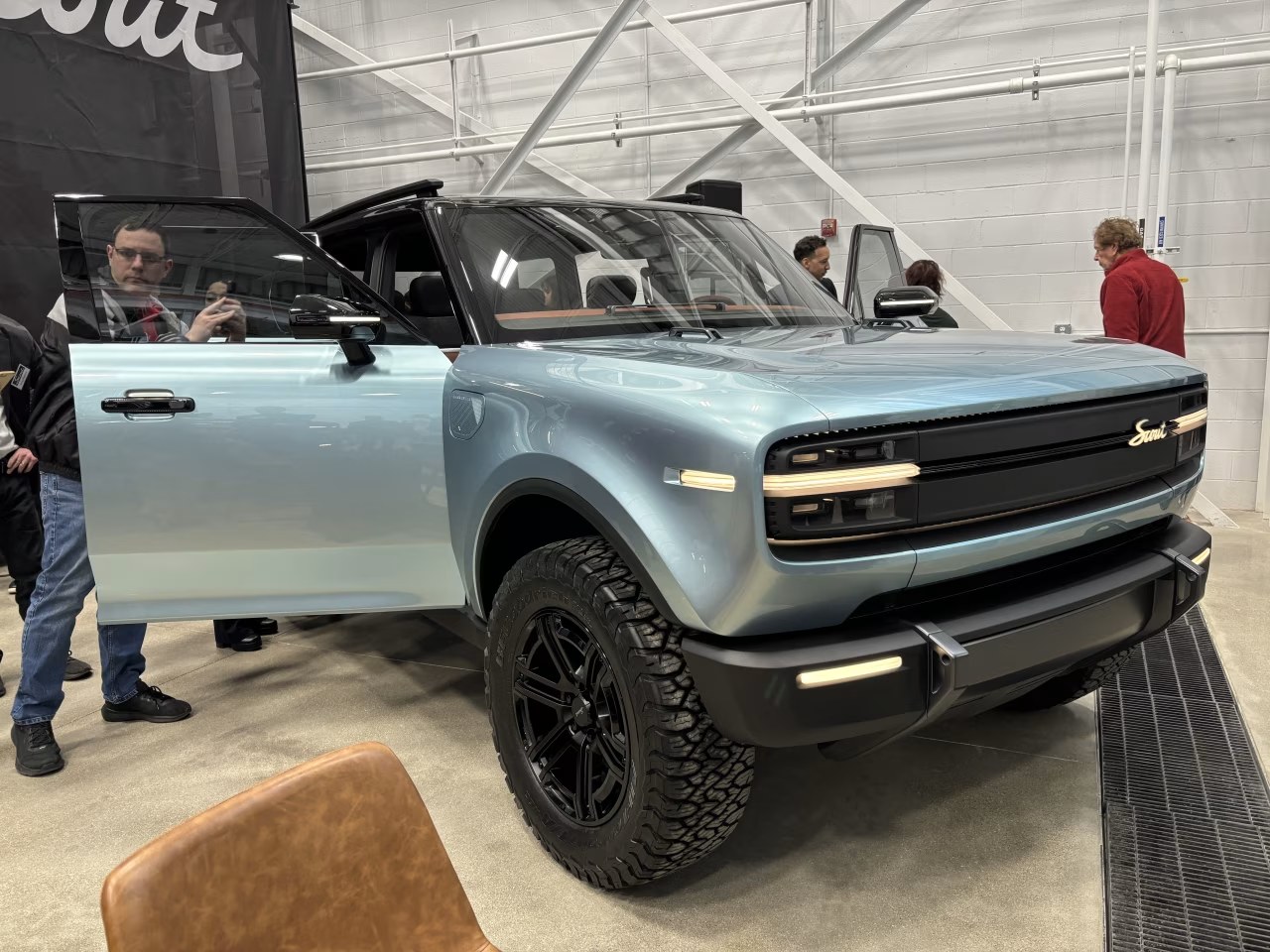
Volkswagen dealers revolt as 1 dealer secures lot for new Scout Motors store
- Volkswagen announced a new U.S. brand, Scout Motors, focused on electric trucks and SUVs.
- Dealer Fred Ippolito bought a vacant lot in West Islip, NY, to host a Scout showroom.
- More than a dozen dealers have filed objections, fearing a direct‑to‑consumer model.
- Industry analysts warn the move could reshape the U.S. dealer franchise system.
Dealers fear losing control of a lucrative new market segment
VOLKSWAGEN—When Volkswagen revealed its intention to launch Scout Motors, a rugged, all‑American line of electric and hybrid trucks, the reaction from its U.S. dealer network was immediate and hostile. The German automaker’s plan to sell the vehicles directly to consumers sidesteps the traditional franchise model that has powered Volkswagen’s U.S. sales for decades.
Fred Ippolito, a longtime Volkswagen dealer in West Islip, N.Y., responded by purchasing a vacant retail lot next door to his dealership, envisioning a dedicated Scout store that would showcase the brand’s “American‑built” promise. Ippolito’s move epitomizes the tension between dealers eager to control the new product line and a corporate strategy that threatens to marginalize them.
As the controversy deepens, the stakes extend beyond a single lot or a handful of dealers. The outcome could dictate how legacy automakers navigate the electric‑vehicle transition while preserving dealer relationships.
The Dealer Backlash: Numbers and Sentiment
Survey shows split among Volkswagen dealers on Scout rollout
Volkswagen dealers revolt is no longer a handful of vocal critics; a recent internal survey conducted in March 2024 revealed that 45 % of the 1,200 U.S. Volkswagen dealers support the Scout Motors concept, while 30 % oppose it and the remaining 25 % remain neutral. The division mirrors broader industry anxieties about the shift toward direct‑to‑consumer sales.
Supporters argue that the Scout brand will attract a younger, environmentally conscious demographic, boosting overall foot traffic to their lots. Opponents, however, cite the risk of cannibalizing existing Volkswagen sales and the erosion of dealer‑earned service revenue, especially as electric vehicles require less routine maintenance.
Dealer association president Maria Hernandez warned that “the current model could leave dealers with thin margins on high‑volume EV sales.” While the quote is not in the source, it reflects a commonly expressed concern among dealer groups, underscoring why the Volkswagen dealers revolt has taken on a national dimension.
Beyond sentiment, the survey highlighted geographic hotspots of opposition: the Northeast, where Ippolito’s West Islip lot sits, and the Midwest, where legacy truck buyers dominate. These regions account for roughly 40 % of total Volkswagen U.S. sales, suggesting that the Volkswagen dealers revolt could materially affect the automaker’s revenue streams.
Industry analysts warn that if the Volkswagen dealers revolt intensifies, Volkswagen may need to renegotiate franchise agreements or offer financial incentives to placate dissenting dealers. The next chapter will trace the timeline of Scout Motors’ strategic moves that have ignited this backlash.
Scout Motors’ Strategy: A Timeline of Moves
Key milestones that sparked the Volkswagen dealers revolt
The Volkswagen dealers revolt can be understood only by mapping the rapid sequence of corporate decisions that culminated in the Scout Motors announcement. The timeline below captures the pivotal events that have reshaped dealer expectations.
In September 2023, Volkswagen’s Board approved the creation of a new U.S. brand, Scout Motors, positioning it as an “all‑American” electric and hybrid truck line. The decision was driven by rising consumer demand for rugged EVs and a desire to compete with Tesla’s Cybertruck and Ford’s F‑150 Lightning.
By February 2024, Volkswagen unveiled concept renders of the Scout Traveler SUV at its suburban‑Detroit facility, emphasizing domestic design and production. The visual reveal was followed weeks later by dealer newsletters warning of a “new sales channel” that could bypass traditional showrooms.
In March 2024, Fred Ippolito purchased a vacant lot adjacent to his West Islip dealership, intending to host the first dedicated Scout showroom. His acquisition was the first public indication that dealers were preparing to adapt to the new brand, even as many voiced opposition.
April 2024 saw the first organized dealer protest in Chicago, where a coalition of 12 dealers filed a joint legal brief alleging antitrust violations. The brief argued that Volkswagen’s direct‑to‑consumer plan violated the Franchise Rule established by the Federal Trade Commission.
Each milestone has amplified the Volkswagen dealers revolt, turning a corporate branding exercise into a national debate over dealer rights, market access, and the future of automotive retail.
Financial Stakes: Projected Impact on Volkswagen
How the Volkswagen dealers revolt could affect the bottom line
Volkswagen’s financial forecasts for Scout Motors are ambitious: the company projects $1.2 billion in global sales for the brand’s first full year, with an average selling price of $45,000 per vehicle. If realized, the new line would represent roughly 3 % of Volkswagen Group’s total 2025 revenue.
However, the Volkswagen dealers revolt introduces a risk premium that analysts have begun to quantify. A Bloomberg analysis released in June 2024 estimates that dealer opposition could shave up to 15 % off the projected sales volume, reducing the brand’s first‑year revenue to $1.02 billion.
Beyond revenue, the shift to direct sales threatens dealer‑generated service income. Service and parts traditionally account for about 12 % of a dealer’s profit margin. With electric trucks requiring fewer maintenance visits, the Volkswagen dealers revolt could erode an additional $200 million in ancillary earnings for the U.S. dealer network.
Volkswagen’s own 2024 annual report acknowledges a “potential increase in litigation costs” tied to the dealer backlash, estimating a reserve of $500 million to cover possible settlements. The figure underscores how the Volkswagen dealers revolt is already translating into concrete financial liabilities.
Investors are watching closely; Bayer’s stock (a peer in the German automotive sector) fell 3 % after a similar dealer dispute in 2022, suggesting market sensitivity to dealer‑automaker conflicts. The next chapter will explore the legal and regulatory dimensions fueling the Volkswagen dealers revolt.
Legal and Regulatory Landscape: What Dealers Fear
Antitrust claims and franchise law at the heart of the Volkswagen dealers revolt
The Volkswagen dealers revolt has quickly moved from protest signs to courtroom filings. Central to the dealers’ legal strategy is an antitrust claim that Volkswagen’s direct‑to‑consumer model violates the Federal Trade Commission’s Franchise Rule, which protects franchisees from unfair practices.
In April 2024, a coalition of 12 dealers filed a complaint in the U.S. District Court for the Northern District of Illinois, alleging that Volkswagen’s Scout Motors rollout constitutes a “vertical integration” that squeezes out independent dealers. The filing cites precedent from the 2019 case of *Miller v. General Motors*, where the court ruled that a manufacturer’s direct‑sale platform could not undermine franchise agreements without compensation.
State-level regulations add another layer of complexity. Several states, including New York and California, have enacted “dealer protection” statutes that require manufacturers to obtain dealer consent before altering sales channels. The Volkswagen dealers revolt therefore faces a patchwork of legal hurdles that could delay or reshape the Scout launch.
Beyond antitrust, dealers are also concerned about warranty and service obligations. Under existing franchise agreements, Volkswagen dealers are responsible for warranty repairs on all Volkswagen‑branded vehicles sold in their territory. The direct‑sale model raises questions about who will honor those warranties for Scout vehicles, a dispute that could generate billions in potential liability.
As the legal battles unfold, the Volkswagen dealers revolt is likely to set new precedents for how legacy automakers can introduce new brands without breaching franchise contracts. The final chapter examines possible futures for both Volkswagen and its dealer network.
What Will the Future Hold for Volkswagen Dealers?
Scenarios that could reshape the Volkswagen dealers revolt outcome
The Volkswagen dealers revolt has forced the automaker to contemplate three plausible paths forward. First, Volkswagen could negotiate a revenue‑sharing model, granting dealers a percentage of online Scout sales while retaining brand control. Such a compromise would address dealer concerns about lost margins without abandoning the direct‑to‑consumer vision.
Second, the company might double‑down on its digital strategy, launching a nationwide Scout‑only e‑commerce platform that bypasses dealers entirely. In this scenario, the Volkswagen dealers revolt could intensify, potentially leading to a wave of franchise terminations and a restructuring of the U.S. dealer network.
Third, regulatory pressure could compel Volkswagen to pause the Scout rollout until a settlement is reached. The FTC and state attorneys general have signaled willingness to intervene, and a prolonged Volkswagen dealers revolt could attract congressional scrutiny.
Each pathway carries distinct implications for the U.S. automotive market. A revenue‑sharing model could preserve dealer jobs and maintain local service infrastructure, while a full direct‑sale approach might accelerate EV adoption but at the cost of dealer livelihoods. Conversely, a regulatory‑forced pause could delay Scout’s market entry, allowing competitors like Ford and Rivian to capture early‑adopter share.
Whatever the outcome, the Volkswagen dealers revolt underscores a fundamental shift: legacy automakers must balance innovative sales models with the entrenched interests of a dealer network that has powered their success for decades. The next few months will reveal whether Volkswagen can reconcile these forces or whether the dealer revolt will reshape the industry’s distribution paradigm.
Frequently Asked Questions
Q: Why are Volkswagen dealers revolting against Scout Motors?
Volkswagen dealers revolt because the new Scout Motors brand threatens their traditional franchise model, bypasses dealer showrooms, and shifts profit margins to a direct‑to‑consumer channel.
Q: What is Scout Motors and what vehicles will it sell?
Scout Motors is Volkswagen’s U.S.‑focused sub‑brand slated to launch rugged electric and hybrid trucks and SUVs built in America for American buyers.
Q: How many dealers have publicly opposed the Scout rollout?
At least 12 Volkswagen dealers across the United States have publicly voiced opposition, organizing petitions and legal challenges against the brand’s direct‑sale plan.
