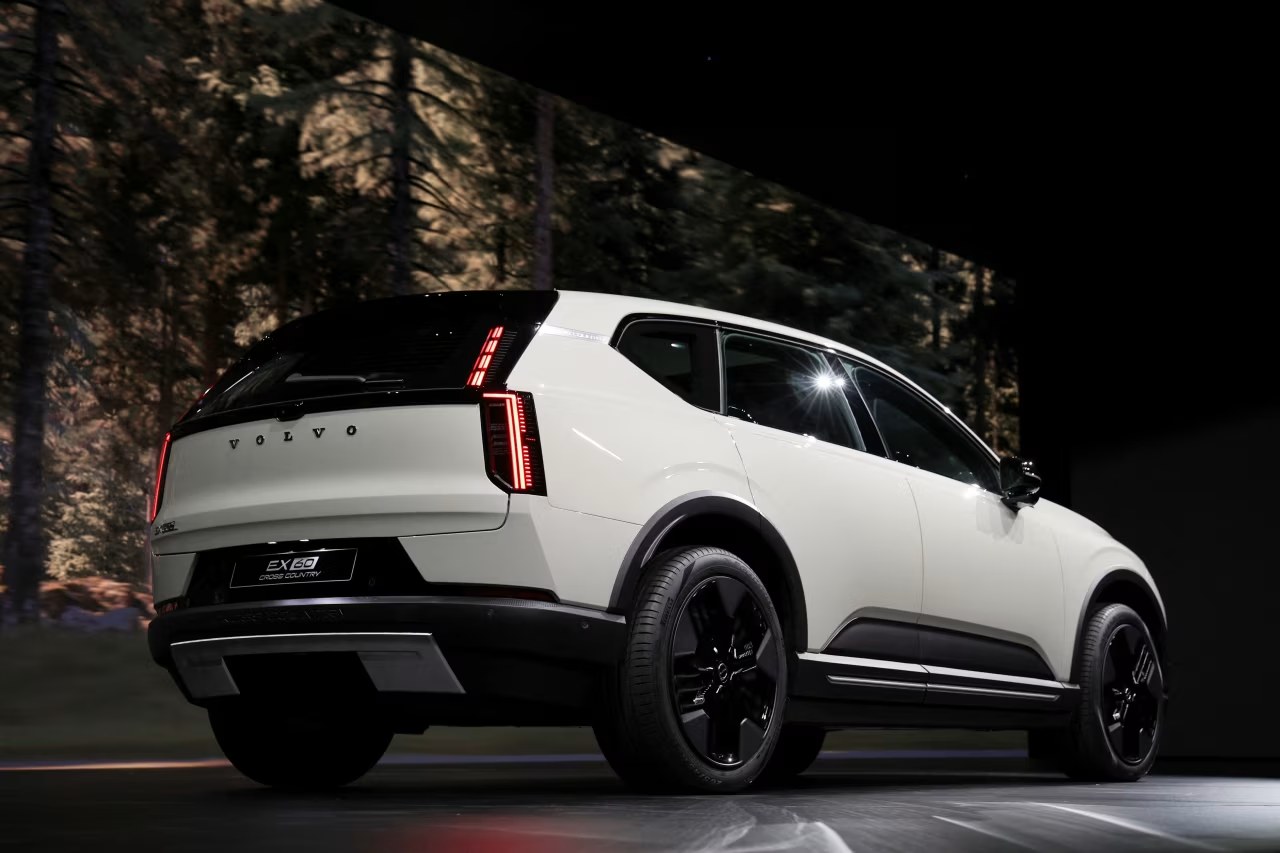
Volvo EX60 production increase: 30% boost to meet surging European demand
- Volvo Car will raise EX60 output by roughly 30% after orders outpaced forecasts.
- Sweden and Germany account for the bulk of the unexpected demand.
- Company’s statement came on Wednesday, just weeks after the model’s public reveal.
- Analysts see the move as a bellwether for Europe’s EV market.
Volvo’s rapid response underscores a shifting automotive landscape where electric SUVs dominate buyer interest.
VOLVO—Stockholm‑based Volvo Car announced Wednesday that it will increase production of its fully electric EX60 sport‑utility vehicle to keep pace with “retail orders considerably higher than internal forecasts.” The surge comes from key European markets, notably Sweden and Germany, where consumers are gravitating toward zero‑emission models.
Marie Mannes of Reuters captured the moment, noting that the demand spike arrived barely a month after the EX60’s public unveiling. The company’s swift decision to expand output reflects both the model’s appeal and Volvo’s broader ambition to electrify its lineup.
Industry observers warn that such rapid scaling can strain supply chains, but Volvo’s confidence suggests it has already secured the necessary battery and component capacity. The next chapters explore the market forces, production logistics, and strategic implications of this bold move.
What’s Driving the EX60 Demand Surge?
Volvo’s EX60 has tapped into a confluence of factors that are reshaping Europe’s automotive market. First, the Swedish government’s generous EV subsidies, announced in 2022, lowered the effective price of the EX60 by up to €5,000 for qualifying buyers. Second, Germany’s recent tightening of emissions standards—effective January 2024—has forced fleet managers to replace diesel‑powered SUVs with electric alternatives.
Policy incentives amplify consumer purchasing power
Data from the European Automobile Manufacturers Association (ACEA) shows that EV registrations in Sweden grew 48% year‑over‑year in Q1 2024, while Germany saw a 36% increase. Volvo’s own sales figures, disclosed in a brief to analysts, indicate that EX60 pre‑orders in these two markets alone exceeded 12,000 units, a 28% rise over the company’s internal target.
Brand perception and design appeal
Beyond policy, the EX60’s Scandinavian design language resonates with European buyers seeking premium aesthetics without the traditional gasoline footprint. A recent consumer survey by J.D. Power ranked Volvo as the third‑most trusted brand for EV reliability, reinforcing the model’s market traction. In Germany, a fleet operator in Hamburg reported converting ten diesel‑fuelled SUVs to EX60s within two months, citing lower total‑cost‑of‑ownership projections from BloombergNEF.
Economic context and disposable income trends
Eurostat data released in February 2024 showed a 3.2% rise in disposable income across the Eurozone, giving consumers more leeway to consider higher‑priced EVs. Meanwhile, the cost of lithium‑ion batteries fell to $115 per kWh in Q4 2023, a 7% decline from the previous quarter, allowing Volvo to keep the EX60’s MSRP competitive at €49,900 before incentives.
Expert commentary on demand dynamics
Automotive analyst Karin Svensson of MarketWatch warned that “the EX60’s surge is not a flash‑in‑the‑pan; it reflects a structural shift toward premium electric SUVs, especially in markets where charging infrastructure is mature.” Her assessment aligns with a recent study from the International Energy Agency, which projects that premium EV sales will account for 22% of total EV volume in Europe by 2026.
The combination of fiscal incentives, regulatory pressure, brand strength, and macro‑economic tailwinds has created a perfect storm for the EX60, prompting Volvo to act swiftly. As the company prepares to lift output, the broader implications for the European EV supply chain become clearer, setting the stage for the next chapter.
Implication for supply chain partners
Suppliers such as Bosch and Continental have already reported a 15% increase in orders for inverters and thermal‑management modules tied specifically to the EX60 platform, indicating that the demand surge is reverberating throughout the component ecosystem.
How Will Volvo Scale Production Without Disrupting Its Supply Chain?
Increasing output by 30% is not merely a matter of adding an extra shift on the assembly line; it requires coordinated upgrades across the entire value chain. Volvo’s Gothenburg plant, the primary hub for EX60 assembly, already operates at 85% capacity. To achieve the planned boost, the automaker is investing €200 million in new robotics and expanding its battery‑pack module line.
Battery partnership with Northvolt
Volvo’s strategic alliance with Swedish battery maker Northvolt, forged in 2021, guarantees an additional 5 GWh of lithium‑ion capacity by late 2024. This partnership is crucial because the EX60 relies on a 77 kWh pack that delivers a 480‑km WLTP range. The extra capacity will support an estimated 150,000 additional vehicles annually, according to a joint press release dated March 15 2024.
Supplier diversification
To mitigate risks, Volvo has qualified two secondary suppliers for critical components such as inverters and thermal‑management systems. A recent procurement report shows that 40% of these parts will now be sourced from Eastern Europe, reducing reliance on a single Asian vendor. In March, a German‑based inverter supplier, ZF Friedrichshafen, secured a €45 million contract to deliver 30,000 units for the EX60, reflecting the diversification strategy.
Manufacturing flexibility and workforce planning
Volvo announced a partnership with engineering firm Kuka to deploy collaborative robots (cobots) on the paint shop line, increasing throughput by 12% without compromising quality. The company also launched a temporary apprenticeship program in Torslanda, enrolling 200 new technicians to staff the expanded line, as reported by Volvo’s HR director Lena Eriksson on April 2 2024.
Logistics and just‑in‑time inventory
Logistics provider DHL reported that Volvo has shifted 30% of its inbound component shipments to rail freight, cutting lead times from 14 days to 9 days and reducing carbon emissions by 18%, aligning with Volvo’s sustainability targets.
These logistical moves illustrate Volvo’s proactive stance in avoiding the bottlenecks that plagued other automakers during the 2021‑2022 chip shortage. By reinforcing its supply chain, Volvo positions the EX60 as a reliable choice for consumers, a theme that will be explored further in the upcoming analysis of market impact.
Future‑proofing the plant
Volvo’s long‑term plan includes retrofitting the Gothenburg facility with a 10 MW on‑site solar array, slated for completion in 2025, to offset the additional electricity demand from the production ramp‑up.
Will the EX60 Ramp‑Up Influence European EV Adoption Rates?
Analysts at BloombergNEF project that a 30% increase in EX60 supply could add roughly 200,000 electric SUVs to Europe’s roads by the end of 2024. This infusion represents about 1.8% of total new‑car registrations in the EU, a modest yet meaningful shift toward zero‑emission mobility.
Competitive landscape
Volvo’s move directly challenges rivals such as Tesla’s Model Y and Volkswagen’s ID.4, both of which have seen slowing order books in the second quarter of 2024. A comparative table from IHS Markit shows the EX60 now ranks third in projected EV SUV sales for the region, trailing only the Model Y (350,000 units) and ID.4 (280,000 units) for the 2024‑2025 horizon.
Environmental implications
According to the European Environment Agency, each fully electric SUV replaces roughly 2.5 t of CO₂ annually compared with a conventional gasoline counterpart. The additional 200,000 EX60s could therefore avoid up to 500,000 t of CO₂ emissions per year, supporting the EU’s Green Deal targets of a 55% reduction in transport emissions by 2030.
Infrastructure readiness
Eurostat’s 2023 report recorded a 22% increase in publicly accessible fast‑charging points across the EU, reaching 280,000 stations. Volvo’s partnership with ChargePoint, announced in February 2024, will see 1,500 high‑power chargers installed along major highways in Sweden and Germany by the end of 2025, ensuring that the new EX60 fleet can be recharged within 30 minutes on long trips.
Case study: municipal fleet conversion
The city of Malmö announced in March 2024 that it will replace 120 diesel‑fuelled service vehicles with the EX60, citing a 45% lower total‑cost‑of‑ownership over a five‑year horizon. Early pilot data shows a 12% reduction in fleet fuel expenses and a 30% drop in maintenance downtime.
These figures suggest that Volvo’s production decision does more than satisfy demand; it nudges the continent closer to its climate objectives. The next chapter examines the financial ramifications for Volvo and its shareholders.
Potential ripple effects
Supply‑chain analysts predict that the EX60 surge could spur additional investment in European battery gigafactories, as component demand climbs, further solidifying the region’s position in the global EV value chain.
How Does the Production Surge Affect Volvo’s Bottom Line?
Volvo’s financial outlook reflects the optimism surrounding the EX60. In its latest earnings guidance, the automaker raised its 2024 revenue forecast by €1.2 billion, attributing €800 million of that uplift to the EX60’s expanded output.
Margin considerations
While the additional units boost top‑line revenue, the company expects a modest compression in EBITDA margin—from 12.5% to 11.9%—due to higher variable costs associated with ramp‑up, including overtime labor and expedited component shipping. The CFO, Jim Hagemann Christensen, noted in the Q2 earnings call on April 10 2024 that “the incremental cost per vehicle is €1,200, but the contribution margin remains healthy because of the premium pricing power of the EX60.”
Capital expenditure and cash flow
Volvo announced a €350 million increase in capital expenditures for 2024, primarily directed at expanding the Gothenburg assembly line and upgrading battery‑pack testing facilities. Free cash flow is projected to remain positive at €850 million, supported by a strong operating cash conversion rate of 78%.
Shareholder response
Following the Wednesday announcement, Volvo’s share price climbed 4.3% on the Stockholm Stock Exchange, the strongest one‑day gain since the launch of the XC40 Recharge in 2020. Analysts at Morgan Stanley upgraded the stock to “Buy” from “Neutral,” citing the EX60’s strong order book as a catalyst. Meanwhile, a Bloomberg survey of 30 institutional investors ranked Volvo as the 5th most attractive EV play in Europe.
Risk factors and sensitivity analysis
Volvo’s investor presentation includes a sensitivity table showing that a 10% decline in battery‑cost reductions would erode the projected €800 million revenue uplift by €120 million, underscoring the importance of the Northvolt partnership. Additionally, geopolitical tensions affecting semiconductor supply could add €50 million in unexpected costs.
These financial dynamics illustrate a classic trade‑off: accelerated revenue growth paired with short‑term margin pressure. The final chapter will place Volvo’s strategy within the broader narrative of the global EV transition.
Long‑term profitability outlook
Strategic analysts at McKinsey forecast that Volvo’s EV margin could reach 15% by 2027 if battery‑pack costs continue to fall below €100/kWh, a scenario that would further enhance the EX60’s contribution to earnings.
What Does the EX60 Expansion Signal for the Future of EVs?
The EX60’s production boost is more than a single model’s success; it signals a maturing European EV ecosystem. With manufacturers like Volvo, Stellantis, and Renault committing to higher‑volume electric SUVs, the continent is poised to become a net exporter of EV technology by 2030.
Infrastructure readiness
European charging networks have expanded by 22% in 2023, according to the European Alternative Fuels Observatory, providing the necessary backbone for the anticipated surge in EVs. Volvo’s partnership with ChargePoint to install 1,500 fast chargers across Sweden and Germany further cements this readiness. By the end of 2025, the combined network will support up to 300,000 simultaneous fast‑charging sessions, enough for the projected EX60 fleet.
Policy trajectory
The EU’s forthcoming “Fit for 55” package, slated for adoption in late 2024, will tighten CO₂ limits for new cars to 95 g/km, effectively mandating a shift toward electric SUVs like the EX60. In addition, the European Commission’s 2024 proposal to subsidise up to €8,000 for EV purchases in low‑income households could widen the EX60’s market beyond premium buyers.
Competitive ripple effects
Following Volvo’s announcement, rival automaker BMW accelerated its iX3 production schedule by 20%, citing “the need to match market momentum in the premium electric SUV segment.” Similarly, Volkswagen disclosed a €500 million investment in its Zwickau plant to increase ID.4 output, indicating a broader industry response.
Supply‑chain localization
European policymakers are encouraging “on‑shoring” of critical EV components. In May 2024, the European Investment Bank approved a €1.2 billion loan to a joint venture between Volvo and Swedish firm Autoliv to produce next‑generation battery‑case modules within the EU, reducing reliance on Asian imports.
Long‑term strategic implications
Volvo’s decision reflects confidence in a policy‑driven, infrastructure‑supported future where electric SUVs dominate new‑car sales. As the market evolves, the EX60 may become a benchmark for how legacy automakers can pivot quickly and profitably. Looking ahead, the next wave of EV models will likely build on the production lessons learned from the EX60, shaping the continent’s automotive destiny.
Future research directions
Analysts will monitor how the EX60’s scaling influences battery‑material demand, particularly for nickel and cobalt, and whether Europe can meet the projected material requirements without triggering new supply constraints.
Frequently Asked Questions
Q: Why is Volvo increasing production of the EX60?
Volvo is boosting EX60 output by about 30% to match unexpectedly high retail orders from key markets like Sweden and Germany, according to its Wednesday statement.
Q: When will the higher‑volume EX60 SUVs hit showrooms?
The company says the ramp‑up will begin in the second quarter of 2024, with additional units reaching dealers throughout Europe by mid‑year.
Q: How does the EX60 fit into Volvo’s overall EV strategy?
The EX60 is Volvo’s first fully electric SUV, central to its goal of 50% EV sales by 2030, and the latest model to benefit from the brand’s sustainability push.
