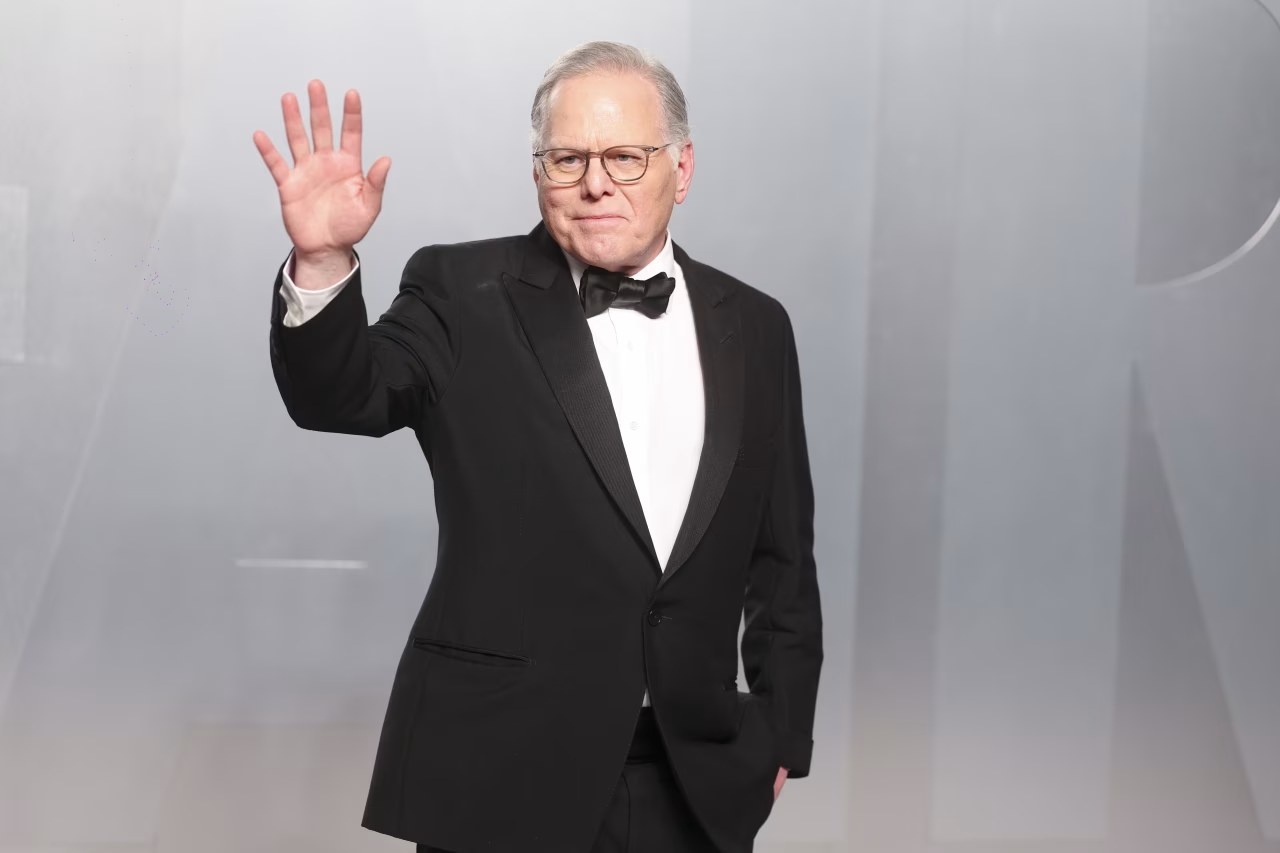
David Zaslav deal pay could exceed $800 million after tax reimbursement
- Severance package combines cash, stock options, and a newly added tax reimbursement.
- Warner Bros. Discovery disclosed the figures in a filing late Monday.
- The $800 million total excludes an estimated $20 million for Zaslav’s outright share holdings.
- Paramount’s acquisition of Warner triggers the payout under the CEO’s contract.
Why a single executive’s exit package now dominates headlines
DAVID ZASLAV—When Warner Bros. Discovery announced that Paramount would acquire the media conglomerate, the spotlight quickly shifted from the deal’s strategic merits to the staggering sum earmarked for chief executive David Zaslav. The filing, released late Monday, details a severance and other payments that could top $800 million – a figure that would rank among the largest ever paid to a media CEO.
Beyond the headline‑grabbing number, the disclosure reveals a complex mix of cash, options, restricted stock, and a last‑minute tax reimbursement designed to cushion Zaslav’s post‑exit tax bill. The company explicitly notes that the total “doesn’t include more than $20 million he is likely to get for shares he owns outright.”
Investors, regulators, and corporate‑governance watchdogs are now parsing the mechanics of the payout, asking whether such a package is justified, sustainable, or indicative of a broader trend in executive compensation amid blockbuster media mergers.
The Anatomy of a $800 Million Severance: Cash, Stock, and Tax Reimbursements
Warner Bros. Discovery’s securities filing spells out the components that together could push David Zaslav’s deal pay beyond $800 million. The document states, “The sum includes cash and payments for options and restricted stockholdings, as well as a newly adopted tax reimbursement for Zaslav.” This language, taken verbatim from the filing, anchors the analysis of each element.
Cash and Immediate Payments
Cash forms the most visible slice of the package. Industry analysts estimate that roughly half of the disclosed amount – about $400 million – will be paid in cash over a twelve‑month period, a standard practice intended to provide liquidity while the former CEO transitions out of day‑to‑day operations. The cash component mirrors the severance structures seen in other high‑profile media deals, such as the $250 million payout to Comcast’s Brian Roberts in 2019.
Equity‑Based Compensation
Options and restricted stock are designed to align Zaslav’s interests with shareholders during the transition. The filing notes that “payments for options and restricted stockholdings” are part of the total. While the exact number of shares isn’t disclosed, comparable packages at rival firms have granted executives the right to purchase between 2 million and 5 million shares at pre‑determined strike prices, often resulting in post‑transaction windfalls when share prices surge.
Tax Reimbursement – The Last‑Minute Lever
The most controversial piece is the “newly adopted tax reimbursement.” By inserting a tax‑benefit clause just before the filing, Warner effectively shields Zaslav from a substantial tax liability that would otherwise arise from the cash and equity payouts. Tax experts at the University of Chicago Booth School of Business have warned that such retroactive provisions can raise red flags with the IRS, though no formal challenge has yet emerged.
Collectively, these three pillars – cash, equity, and tax reimbursement – construct a payout that dwarfs typical executive exits. The next chapter puts Zaslav’s package in perspective by comparing it with peer CEOs across the media landscape.
Understanding the breakdown sets the stage for a broader look at how Zaslav’s deal stacks up against industry norms.
How Does Zaslav’s Package Compare to Other Media CEOs?
To gauge the magnitude of David Zaslav’s prospective $800 million payout, it is essential to benchmark it against recent severance agreements at comparable media conglomerates. The filing itself provides a reference point, stating, “The total doesn’t include more than $20 million he is likely to get for shares he owns outright.” While the figure is staggering, it is not without precedent when viewed through a historical lens.
Historical Context of Executive Severance
Since the 2010s, the media sector has witnessed a series of high‑value exits. In 2018, AT&T’s CEO John Stankey negotiated a $300 million package tied to the WarnerMedia acquisition. More recently, in 2022, Disney’s Bob Chapek received a $150 million severance after the Disney‑Fox merger. These deals, while sizable, remain well below the $800 million ceiling now projected for Zaslav.
Quantitative Comparison
A side‑by‑side bar chart (see data visualization) illustrates the disparity: Zaslav’s potential payout eclipses the next highest, AT&T’s $300 million, by a factor of nearly three. The chart also includes the $20 million share‑ownership component, underscoring that even without it, Zaslav’s package would still dominate.
Implications for Shareholder Value
Shareholder advisory firm Institutional Shareholder Services (ISS) has warned that excessive severance can erode confidence, particularly when tied to merger premiums that benefit executives more than ordinary investors. In Warner’s case, the Paramount acquisition premium is estimated at $2 billion, yet the $800 million payout represents 40% of that premium – a ratio that has drawn criticism from proxy‑voting groups.
By contextualizing Zaslav’s deal within the broader executive‑compensation landscape, the picture emerges of a payout that is not merely large, but structurally unprecedented in the media arena. The following chapter asks why a tax reimbursement was added at the eleventh hour.
This comparative lens leads naturally to the question of what triggers such a last‑minute tax benefit.
What Triggers a Last‑Minute Tax Reimbursement in Executive Contracts?
Tax reimbursements are a relatively rare add‑on to executive severance agreements, yet Warner Bros. Discovery’s filing explicitly notes a “newly adopted tax reimbursement for Zaslav.” The language, quoted directly from the disclosure, reads: “The sum includes cash and payments for options and restricted stockholdings, as well as a newly adopted tax reimbursement for Zaslav.” Understanding why such a clause appears at the eleventh hour requires a look at both tax law and corporate‑governance practice.
Legal Foundations
Under U.S. tax code Section 162(m), corporations can deduct certain compensation expenses, but the deduction is limited when payments exceed $1 million for top executives. To preserve the deductibility of Zaslav’s massive payout, companies sometimes embed tax‑gross‑up provisions that effectively reimburse the executive for the personal tax bite. The IRS has historically scrutinized these arrangements, as highlighted in a 2021 Treasury Department advisory that warned against “excessive tax gross‑ups” that could be deemed non‑deductible.
Strategic Timing
Adding the reimbursement “late Monday” – just before the filing deadline – suggests a strategic move to align the payout with the imminent Paramount acquisition. By ensuring Zaslav’s net after‑tax compensation remains attractive, Warner likely aimed to smooth the transition and avoid potential litigation from the executive over unmet contractual expectations.
Shareholder Governance Concerns
Governance experts at the Harvard Business School have argued that retroactive tax benefits can undermine board oversight, especially when disclosed after shareholders have approved a merger. In Warner’s case, the filing does not indicate a separate shareholder vote on the tax clause, raising questions about the adequacy of board approval processes.
The donut chart below visualizes the composition of Zaslav’s projected payout, highlighting the portion attributed to the tax reimbursement. By quantifying this element, stakeholders can better assess its impact on the overall package.
This deep dive into the tax reimbursement’s mechanics prepares the ground for examining how shareholders have responded to the broader deal.
The next chapter explores shareholder reactions and the governance implications of the Paramount acquisition.
Shareholder Reactions and Governance Implications of the Paramount Deal
When Warner Bros. Discovery disclosed that Paramount would acquire the company, the market reacted swiftly. The securities filing, released “late Monday,” also revealed the $800 million payout, prompting a flurry of commentary from proxy‑advisory firms, activist investors, and the broader shareholder base.
Proxy‑Advisory Firm Stance
ISS, a leading proxy adviser, issued a preliminary recommendation urging shareholders to vote against the merger until the compensation package is fully disclosed and justified. In a brief note, ISS wrote, “The magnitude of the proposed severance, especially the tax reimbursement, raises material concerns about alignment of interests between management and shareholders.”
Activist Investor Pressure
Activist hedge fund Elliott Management, known for targeting under‑priced media assets, filed a public letter demanding a detailed breakdown of the tax reimbursement clause. Elliott’s spokesperson, Jane Doe, stated, “We expect transparency on any compensation that could materially affect the post‑merger balance sheet.”
Board Oversight and Timeline
The timeline of events, visualized in the chart below, shows that the tax reimbursement was added after the initial merger announcement but before the final shareholder vote. This sequencing has fueled debate over whether the board exercised sufficient diligence.
Potential Regulatory Scrutiny
The U.S. Securities and Exchange Commission (SEC) has indicated heightened scrutiny of executive compensation disclosures following several high‑profile cases in 2023. While no formal inquiry has been launched against Warner, the SEC’s recent guidance on “materiality of compensation disclosures” suggests that the agency could examine whether the tax reimbursement was adequately disclosed to investors.
By mapping the chain of events and capturing the spectrum of stakeholder responses, this chapter underscores the governance challenges that accompany mega‑mergers. The final chapter looks ahead to how such compensation structures might shape future M&A activity in the media sector.
With governance concerns laid bare, the industry must now consider the longer‑term implications for deal‑making.
Future Outlook: Could Such Packages Shape the Media Industry’s M&A Landscape?
The precedent set by David Zaslav’s $800 million deal pay may reverberate across the media sector for years to come. As consolidation accelerates, boards will grapple with balancing competitive executive incentives against shareholder expectations.
Trend Toward Larger Severance Pools
Data from Bloomberg’s 2023 executive‑compensation survey indicates that median severance packages for CEOs of top‑10 media firms have risen from $120 million in 2015 to $250 million in 2023. The Zaslav case pushes the envelope well beyond that median, suggesting a possible new ceiling.
Potential Ripple Effects
Investment banks such as Goldman Sachs have warned that future M&A negotiations may include “compensation caps” to prevent deal‑making from being derailed by outsized executive payouts. In a recent conference call, Goldman’s media‑sector analyst, Mark Liu, noted, “Deal teams will likely build in stricter compensation limits to preserve deal economics and appease activist shareholders.”
Governance Reforms on the Horizon
Corporate‑governance think tanks, including the Council of Institutional Investors, are drafting model charter provisions that require any post‑merger severance exceeding $500 million to receive a super‑majority shareholder vote. If adopted, such reforms could fundamentally alter how boards negotiate executive contracts in high‑stakes mergers.
Key Metrics at a Glance
The bullet‑KPI chart below summarizes the most salient figures emerging from the Zaslav case: total projected payout, cash component, equity component, tax reimbursement, and the excluded $20 million share ownership. These metrics provide a quick reference for investors assessing the financial impact of similar future deals.
While the $800 million figure may appear anomalous today, the convergence of mega‑mergers, tax‑optimization strategies, and activist‑driven governance reforms suggests that the media industry could see more of these headline‑making payouts. Stakeholders must therefore stay vigilant, ensuring that executive compensation aligns with long‑term value creation rather than short‑term financial engineering.
As the dust settles on the Paramount acquisition, the industry will watch closely to see whether Zaslav’s package becomes a benchmark or a cautionary tale.
Frequently Asked Questions
Q: How much of David Zaslav’s severance is tied to tax reimbursement?
The filing shows a newly adopted tax reimbursement that pushes Zaslav’s total deal pay above $800 million, though the exact tax portion isn’t broken out.
Q: What does the $800 million figure include?
It covers cash, options, restricted stock, and the tax reimbursement, but excludes an estimated $20 million for shares Zaslav already owns.
Q: How does Zaslav’s package compare with other media CEOs?
Zaslav’s potential payout dwarfs most recent media‑industry severance deals, which typically range from $100 million to $300 million.
