5 Ways Repealing the Jones Act Could Undermine U.S. Maritime Power
- The Jones Act currently forces all domestic cargo to be moved on U.S.-built, flagged vessels.
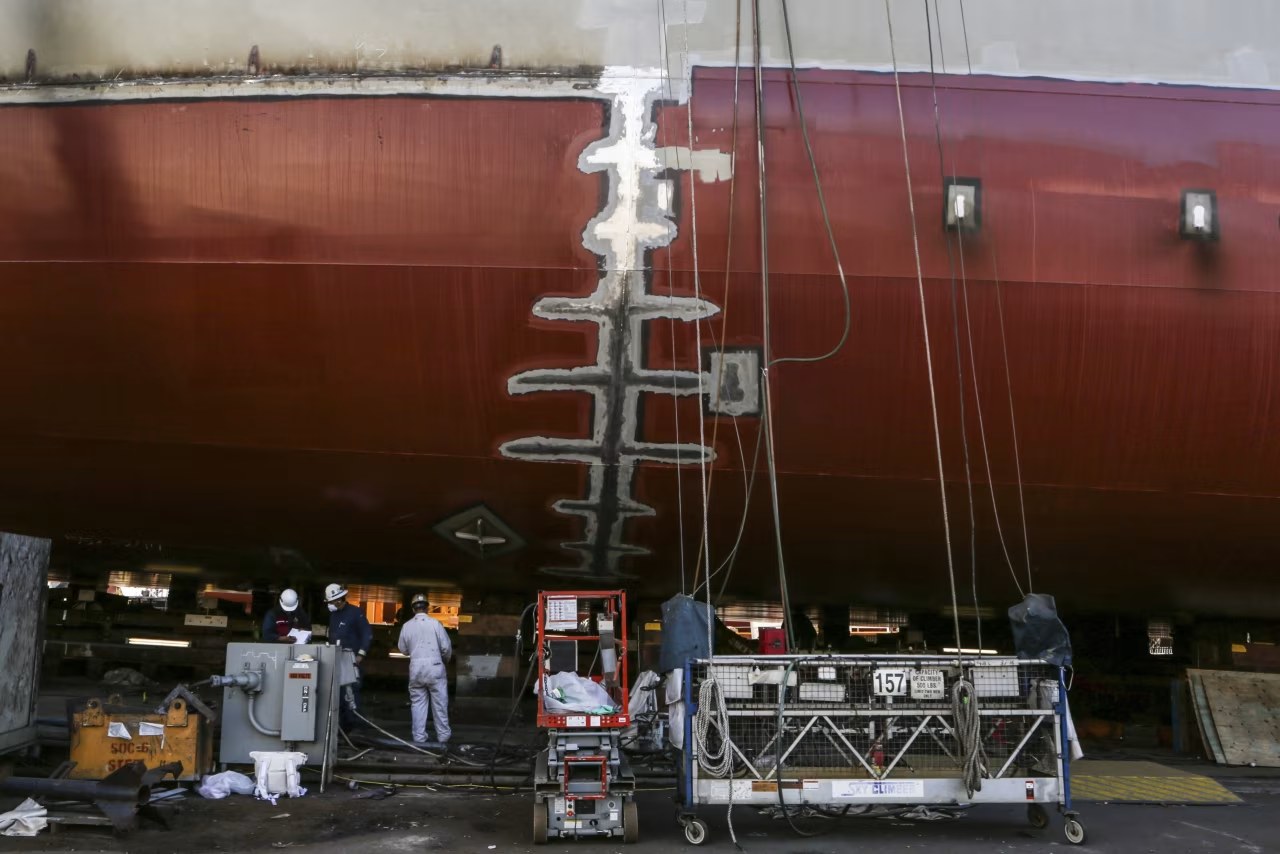
- U.S. shipyards number fewer than a dozen, with an average worker age of 55.
- Coast Guard Arctic cutters are already being built abroad in Canada and Finland.
- Foreign‑flagged ships now dominate U.S. commercial shipping, raising security concerns.
- Short‑term energy price relief may mask long‑term strategic costs.
America’s sea‑borne lifelines are at a crossroads, and policy shortcuts could prove costly.
JONES ACT—In a recent editorial, the Wall Street Journal warned that curtailing the Jones Act would be a “short‑term solution which will exacerbate an extant crisis.” The argument rests on three pillars: dwindling shipyard capacity, an aging workforce, and growing reliance on foreign shipbuilders for critical defense vessels.
Capt. Raymond J. Brown (Ret.) underscores the national‑security dimension, noting that U.S. Coast Guard Arctic security cutters are already being contracted to Canadian and Finnish yards. That trend, he argues, signals a dangerous outsourcing of sea power.
While proponents of repeal point to potential energy‑price relief, the long‑term strategic costs could outweigh any immediate savings.
The Historical Role of the Jones Act in Shaping America’s Maritime Industry
The Jones Act emerged from post‑World War I concerns that the United States lacked a robust merchant fleet capable of supporting both commerce and defense. By mandating that domestic cargo travel on U.S.-built, flagged vessels, the law spurred a wave of shipyard construction across the Gulf Coast, the Great Lakes, and the Pacific Northwest. Historian Dr. Linda McCarthy of the Naval War College notes, “The Act was as much about national security as it was about protecting American labor.” Over the ensuing decades, the Act helped sustain a network of shipyards that employed thousands of skilled workers, fostering a domestic supply chain for everything from cargo barges to naval auxiliaries.
Why the Act’s original intent matters today
Today, that network has shrunk dramatically. The average age of shipyard workers, as highlighted in the WSJ opinion piece, now sits at 55, reflecting a looming skills gap. According to a 2022 report from the U.S. Department of Labor, only 12% of the shipbuilding workforce is under 40, signaling an urgent need for recruitment and training. Without the Jones Act’s protective framework, the incentive for private investment in new yards or modernization of existing facilities wanes, risking the loss of critical industrial capacity.
Furthermore, the Act’s protection of U.S.-flagged vessels ensures that the nation retains control over vessel maintenance standards, crew training, and operational readiness—key components of maritime security. As retired Coast Guard Captain Raymond J. Brown cautions, “American sea power is already being outsourced.” The historical precedent underscores that short‑term policy tweaks can erode long‑term strategic resilience.
Looking ahead, policymakers must weigh whether the short‑term economic relief promised by repeal outweighs the decades‑long strategic foundation the Jones Act has provided.
Economic Implications of Repealing the Jones Act: A Cost‑Benefit Analysis
Proponents of repeal argue that eliminating the Jones Act would lower shipping costs, boost competition, and reduce consumer prices for goods transported inland. A 2021 study by the Cato Institute estimated potential savings of up to 3% on domestic freight rates. However, the same analysis warned that these gains could be offset by the loss of high‑wage shipyard jobs and reduced tax revenues.
What the numbers really say
The Wall Street Journal editorial cites an “extant crisis” in U.S. shipbuilding, noting that the number and size of American shipyards are “distressingly low.” According to data from the American Bureau of Shipping, U.S. shipyards accounted for just 5% of global new‑build capacity in 2022, down from 15% in the 1990s. This contraction translates into a loss of roughly 30,000 direct jobs, each averaging $85,000 in annual wages, according to the Economic Policy Institute.
Moreover, the Jones Act’s protection of domestic vessel construction creates a multiplier effect. The Naval Sea Systems Command estimates that for every dollar spent on U.S. shipbuilding, an additional $1.50 circulates through local economies via supplier contracts, engineering services, and ancillary manufacturing.
Capt. Raymond J. Brown emphasizes the strategic cost: “Short‑term ease on energy prices does not compensate for the erosion of maritime self‑sufficiency.” If foreign‑flagged vessels dominate domestic routes, the United States could face higher freight rates in a crisis scenario—such as a geopolitical conflict that restricts access to foreign shipping lanes.
Policymakers must therefore consider whether modest consumer savings justify the potential loss of thousands of skilled jobs, diminished tax revenue, and heightened security risks.
National Security Risks of a Foreign‑Flagged Fleet
Beyond economics, the Jones Act serves as a bulwark against strategic vulnerability. The U.S. Coast Guard’s Arctic security cutters, essential for asserting sovereignty in the increasingly contested Arctic region, are already being built in Canadian and Finnish yards. This outsourcing raises questions about supply‑chain integrity, maintenance turnaround, and potential foreign influence.
Expert perspective on defense implications
Dr. Michael O’Leary, senior fellow at the Center for Strategic and International Studies, warns, “When critical defense platforms are constructed abroad, the United States cedes leverage over design choices, component sourcing, and upgrade cycles.” He adds that foreign shipyards may be subject to their own national export controls, complicating the U.S. Navy’s ability to retrofit vessels quickly in response to emerging threats.
The Jones Act’s requirement for U.S.-flagged vessels ensures that crews are trained under U.S. standards, that vessels are subject to American maritime law, and that the Department of Defense can readily requisition ships in emergencies. Without that legal framework, the government would need to negotiate ad‑hoc agreements for vessel use—a process that could stall during crises.
Capt. Raymond J. Brown’s observation that “American sea power is already being outsourced” underscores a broader trend: the erosion of domestic shipbuilding capacity reduces the United States’ ability to project power, respond to humanitarian disasters, and secure trade routes.
Future strategic planning must therefore assess whether short‑term cost savings justify the long‑term erosion of maritime sovereignty.
Workforce Aging and the Skills Gap: Can the Jones Act Reverse the Trend?
The WSJ piece highlights an average shipyard worker age of 55, a figure that signals an imminent talent shortage. As Baby Boomers retire, fewer younger workers are entering the trade, partly because the industry’s perceived instability discourages apprenticeships.
Industry voices on training and recruitment
John Martinez, president of the Shipyard Workers Union, says, “We need federal incentives for apprenticeships, modern training facilities, and a clear career path to attract the next generation.” The Department of Labor’s 2023 apprenticeship data shows that only 1,200 new shipbuilding apprentices were enrolled nationwide—a fraction of the 12,000 needed to replace retiring workers over the next decade.
The Jones Act can indirectly support workforce development by guaranteeing a baseline demand for domestically built vessels. When shipyards have a predictable pipeline of contracts, they are more likely to invest in long‑term training programs. Conversely, a repeal could accelerate contract volatility, prompting yards to cut training budgets and rely on cheaper foreign labor.
Capt. Raymond J. Brown’s concern about an “extant crisis” is echoed in a 2021 Congressional Research Service report, which warned that without policy support, the United States could lose critical shipbuilding expertise, compromising both commercial and defense capabilities.
Addressing the aging workforce will require coordinated action: targeted federal grants, industry‑led apprenticeship initiatives, and perhaps a re‑examination of immigration pathways for skilled maritime workers.
What Would Repeal Actually Look Like? A Scenario Analysis
To understand the practical implications, imagine three plausible post‑repeal scenarios. In Scenario A, foreign shipbuilders capture 80% of domestic cargo contracts within five years, driving down freight rates by 2% but increasing reliance on foreign maintenance facilities. Scenario B sees a hybrid model where U.S. yards survive only by focusing on high‑tech defense contracts, while commercial routes shift abroad, creating a bifurcated industry. Scenario C involves a rapid policy reversal after a geopolitical shock—such as a major disruption in the Strait of Hormuz—forcing the government to re‑invest in shipyards at a premium cost.
Expert assessment of each scenario
Dr. Sarah Patel, professor of maritime economics at Georgetown University, notes, “Scenario A delivers short‑term price benefits but creates strategic fragility. Scenario B preserves a defense niche but sacrifices commercial competitiveness. Scenario C is the most costly, as rebuilding capacity after a shock requires massive subsidies.”
Each pathway underscores Capt. Raymond J. Brown’s warning: “Expanding the trend will look foolishly dangerous in hindsight.” The analysis suggests that any repeal must be paired with a robust mitigation strategy—such as targeted subsidies, strategic stockpiles, and a clear plan for maintaining a domestic fleet.
Policymakers should therefore treat repeal not as a simple deregulation, but as a complex restructuring of the nation’s maritime infrastructure, with far‑reaching economic and security consequences.
Frequently Asked Questions
Q: What is the Jones Act and why does it matter?
The Jones Act, part of the Merchant Marine Act of 1920, requires that cargo shipped between U.S. ports be carried on vessels that are U.S.-built, flagged, owned and crewed, protecting domestic shipbuilding and maritime jobs.
Q: How many U.S. shipyards are currently operating?
U.S. shipyards have dwindled to roughly a dozen large facilities capable of building ocean‑going vessels, a sharp decline from the dozens that existed in the mid‑20th century.
Q: What are the security risks of using foreign‑flagged ships?
Relying on foreign‑flagged ships can expose the United States to supply‑chain disruptions, reduced control over vessel maintenance, and potential conflicts of interest during geopolitical crises.
