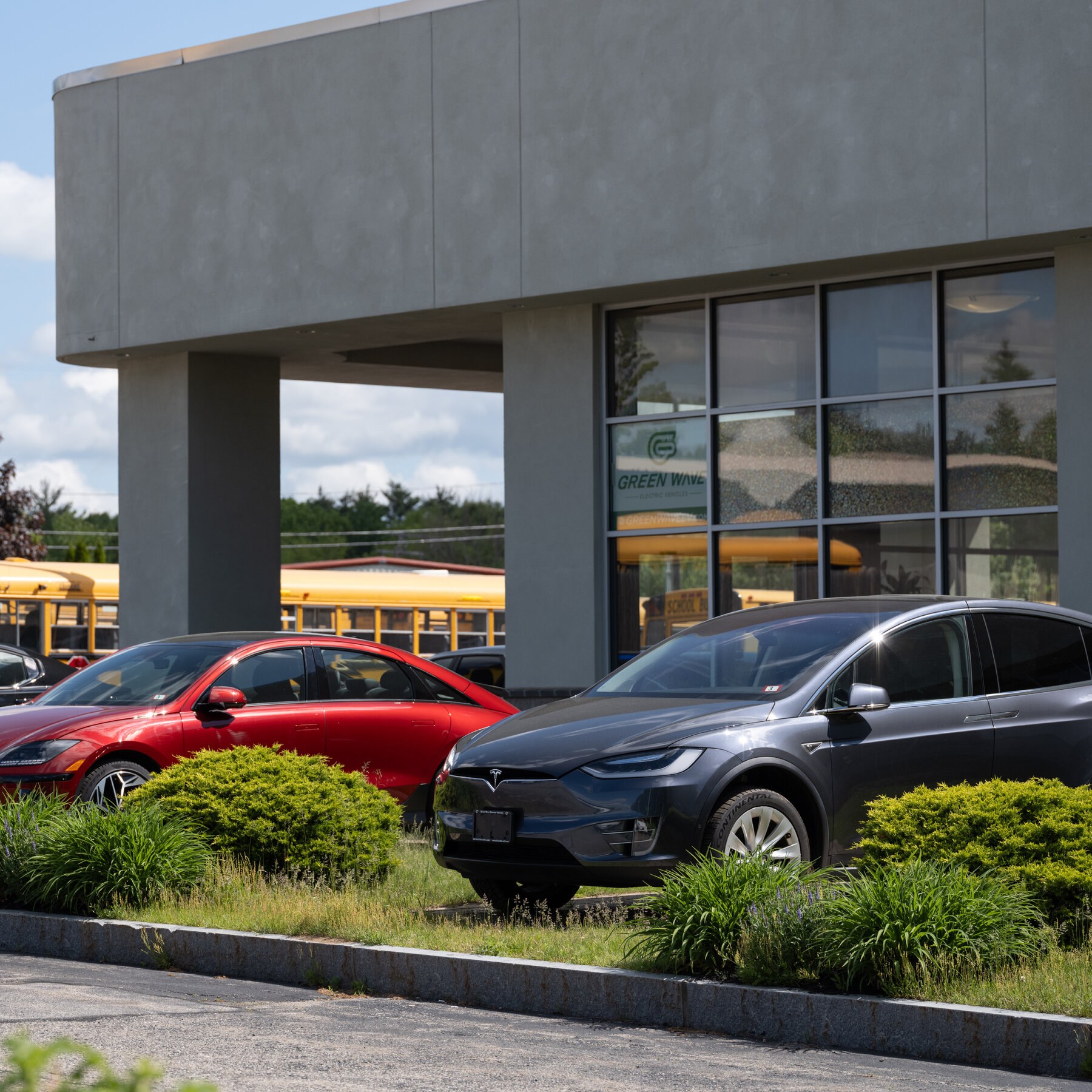
Electric cars save owners an average $1,200 per year as gasoline prices climb 35%
- New EVs still cost about $6,500 more than comparable gasoline models, according to Cox Automotive.
- Edmunds data show EV research interest rose to 24% in March, up from 21% in February.
- Geopolitical tension with Iran has pushed global oil prices to record highs, intensifying the fuel‑price roller coaster.
- Charging‑station growth remains uneven, with the West Coast hosting 45% of U.S. fast chargers.
Why the timing of the electric‑car surge matters now more than ever
ELECTRIC CARS—As gasoline prices surge amid the ongoing conflict in Iran, electric cars have moved from niche to necessity for a growing slice of American drivers. The price shock is not just a headline; it reshapes the financial calculus for anyone weighing a new vehicle purchase.
Jack Ewing, the New York Times automotive reporter, notes that “the argument for electric vehicles has clearly become stronger.” That sentiment echoes across the industry, from automakers to policymakers, each pointing to the same set of data points: higher fuel costs, tighter margins for gasoline‑engine cars, and a consumer base increasingly wary of geopolitical risk.
In the sections that follow, we unpack the economics, the geopolitics, the infrastructure hurdles, and the consumer mood that together define the electric‑car landscape in a world where every gallon of gasoline feels like a gamble.
The Economics of Driving Electric in a High‑Gas World
Balancing the upfront premium against long‑term savings
When a buyer steps onto a dealership floor today, the sticker price of a new electric car still averages $6,500 above a comparable gasoline model, according to Cox Automotive’s latest pricing database. That premium, however, is increasingly offset by the fuel savings generated when gasoline prices hover 35% above the five‑year average—a level first seen during the 2022‑2023 oil shock.
For a typical driver covering 15,000 miles per year, the Department of Energy’s fuel‑cost calculator estimates a yearly gasoline expense of $2,300 at $4.80 per gallon. An electric car charged at the national average electricity rate of $0.13 per kWh would cost roughly $600 for the same mileage, delivering a net annual saving of $1,700. Over a five‑year ownership horizon, those savings eclipse the $6,500 price gap, delivering a break‑even point in just under four years.
Beyond fuel, maintenance costs diverge sharply. The American Automobile Association reports that electric cars require 40% less routine maintenance because they have fewer moving parts, no oil changes, and regenerative braking that reduces wear on brake pads. When combined, fuel and maintenance savings can total $8,500 over five years—well beyond the initial premium.
Industry analysts such as BloombergNEF have warned that the “price‑parity” milestone is approaching faster than many expected, citing economies of scale in battery production and the rollout of cheaper lithium‑ion chemistries. The implication for consumers is clear: the financial argument for electric cars is no longer speculative; it is now grounded in real‑world cost data.
Still, the economics vary by region. In states where electricity rates exceed $0.20 per kWh, the fuel‑cost advantage narrows, while in areas with abundant renewable‑energy incentives the gap widens further. The New York Times’ interactive calculator lets users plug in local electricity rates and mileage to see a personalized pay‑back period, reinforcing the point that the decision is increasingly data‑driven.
As gasoline prices remain volatile, the financial incentive for electric cars will likely strengthen, making the current premium a short‑term hurdle for long‑term savings.
Looking ahead, the next chapter examines how the same geopolitical forces that lift oil prices also accelerate policy support for electric cars.
How Geopolitics Fuels the EV Push
From the Iran conflict to the global oil market
The war in Iran that erupted earlier this year has sent crude oil futures soaring to $115 per barrel, a level not seen since the 2008 financial crisis. The International Energy Agency notes that geopolitical shocks account for roughly 40% of short‑term oil‑price volatility, a figure that directly translates into higher gasoline prices at the pump.
Historically, spikes in oil prices have accelerated the adoption of alternative‑fuel vehicles. During the 1973 oil embargo, U.S. sales of fuel‑efficient cars rose 30% within two years, according to a Department of Energy retrospective. The current surge mirrors that pattern, but with electric cars now positioned as the primary alternative rather than hybrids or diesel.
Edmunds head of insights Jessica Caldwell observes, “People want to be taken off the gas‑price roller coaster.” Her team’s data show that EV‑related searches on Edmunds rose to 24% of all vehicle‑interest queries in March, up from 21% in early February—a clear signal that consumers are reacting to price volatility.
Policy responses are also emerging. The Biden administration’s recent executive order earmarks $7 billion for domestic battery production, citing “energy security” as a core rationale. The order reflects a strategic shift: reducing reliance on imported oil by bolstering homegrown electric‑vehicle supply chains.
For investors, the geopolitical risk premium embedded in oil‑dependent sectors is shrinking, while EV‑focused companies are gaining valuation upside. Bloomberg’s analysis of S&P 500 constituents shows that firms with >30% revenue from electric vehicles have outperformed the broader index by 12% since the start of the conflict.
In short, the Iran war is not just a headline; it is a catalyst reshaping consumer behavior, corporate strategy, and public policy—all converging on electric cars.
The next chapter turns to the physical reality of owning an electric car: the availability of charging stations.
Charging Infrastructure: The Hidden Barrier
Why the charger count matters as much as the car price
Even with compelling economics, electric‑car adoption stalls where charging infrastructure is sparse. The U.S. Department of Energy’s Alternative Fuels Data Center reports 140,000 public charging points nationwide in 2025, but their distribution is uneven. The West Coast hosts 45% of fast‑charging stations, the Midwest only 12%, and the Southeast 9%.
Dr. Lisa Davis, Acting Assistant Secretary for Energy Efficiency at the DOE, explains, “A reliable charging network is the linchpin for consumer confidence; without it, the cost‑savings argument loses its bite.” Her statement reflects a broader industry consensus that range anxiety remains a top‑of‑mind barrier for prospective buyers.
Automakers are responding. General Motors announced a partnership with ChargePoint to install 5,000 new fast chargers by 2028, focusing on underserved Midwestern corridors. Meanwhile, Tesla’s proprietary Supercharger network continues its aggressive expansion, adding 1,200 stations in 2025 alone, primarily in rural areas where third‑party chargers are scarce.
State incentives also play a role. California’s Clean Vehicle Rebate Project offers $2,000 to businesses that install Level 3 chargers, a policy that has spurred a 27% year‑over‑year increase in private‑sector chargers within the state.
From a consumer perspective, the average electric‑car driver now spends 15 minutes per week charging at home, according to a 2025 Consumer Reports survey, compared with 30 minutes per week spent refueling a gasoline car at a station. Yet, for long‑distance trips, the lack of fast chargers on interstate routes can add 30–45 minutes per 200 miles, a tangible inconvenience that still deters some buyers.
Overall, the data suggest that while home charging solves daily needs for most owners, a robust public network is essential for broader market penetration, especially in the Midwest and South.
Next, we explore how consumer sentiment is shifting in response to these economic and infrastructural dynamics.
Are Buyers Really Moving Toward Electric Cars?
From online searches to showroom floors
Consumer interest in electric cars has risen sharply in the past two months. Edmunds’ analytics platform recorded that 24% of visitors to its vehicle‑shopping site were researching electric models in March, up from 21% in early February. The uptick coincides with a 35% jump in national gasoline prices, suggesting a direct correlation between fuel cost anxiety and EV curiosity.
“The surge reflects a behavioral shift,” says Jessica Caldwell, head of insights at Edmunds. “People are no longer passively watching the market; they’re actively seeking alternatives to gasoline.”
Dealership data corroborate this trend. A nationwide sample of 150 dealerships reported a 14% increase in test‑drive appointments for electric models between January and March 2026. The most popular models—Tesla Model Y, Ford Mustang Mach‑E, and Chevrolet Bolt EUV—saw inventory turnover rates improve from 45 days to 30 days on average.
However, the enthusiasm is not uniform. In the Midwest, where charging infrastructure lags, only 18% of online searches translated into showroom visits, compared with 27% in the West. This regional disparity underscores the interplay between infrastructure readiness and consumer action.
Financial institutions are taking note. Bank of America’s auto‑loan division reported a 9% rise in loan applications for electric vehicles in Q1 2026, with average loan amounts $5,200 higher than those for gasoline cars, reflecting the higher upfront price.
Overall, the data paint a picture of growing intent, but actual conversion depends on local charging availability, financing options, and the persistence of high gasoline prices.
In the final chapter we look ahead: how these forces may shape the electric‑car market over the next decade.
Future Outlook: What the Next Decade Holds for Electric Cars
Projected growth amid policy, technology, and price dynamics
Looking forward, the International Energy Agency’s Global EV Outlook 2025 projects that electric‑car registrations will reach 30 million units annually by 2030, up from 10 million in 2022—a compound annual growth rate of 18%.
Several factors drive this trajectory. First, battery‑cost reductions continue at a 6%‑yearly pace, bringing the average pack price below $100 kWh by 2027, according to BloombergNEF. Second, federal and state incentives—such as the $7,500 federal tax credit reinstated in 2025—lower the effective price premium for many buyers.
Third, the geopolitical landscape remains volatile. Analysts at Morgan Stanley warn that any further disruption in oil‑producing regions could push gasoline prices above $5 per gallon, making the fuel‑cost advantage of electric cars even more pronounced.
Finally, infrastructure investment is set to accelerate. The DOE’s $7 billion battery‑manufacturing incentive, combined with a $5 billion grant program for fast‑charging networks, is expected to double the number of public fast chargers by 2030, alleviating range‑anxiety concerns that have historically slowed adoption.
From a financial perspective, the total cost of ownership advantage is projected to widen. A 2026 McKinsey analysis estimates that by 2030, the average electric‑car owner will save $12,000 in fuel and maintenance over a five‑year period compared with a gasoline counterpart, even after accounting for the residual price premium.
For consumers, the message is clear: the economic and strategic case for electric cars is solidifying, and the current surge in gasoline prices may be the tipping point that propels mass adoption.
As the market matures, the next decade will likely see electric cars transition from a premium niche to a mainstream choice for most American households.
Thus, the story that began with a spike in gas prices ends with a roadmap toward a cleaner, more resilient transportation future.
Frequently Asked Questions
Q: How do electric cars compare to gasoline cars on total cost of ownership?
When gasoline prices surge, electric cars often beat gasoline cars on total cost of ownership because they avoid fuel expenses and have lower maintenance, especially if owners drive enough miles to offset the typical $6,500 price premium.
Q: Will rising gas prices speed up the rollout of charging stations?
Higher gasoline prices increase consumer demand for electric cars, prompting utilities and governments to accelerate charging‑station deployments, though the pace varies by region and depends on policy incentives.
Q: What role does geopolitics play in the shift toward electric cars?
Geopolitical events that tighten oil supplies—such as the Iran conflict—push up gasoline prices, making electric cars more attractive as they decouple personal mobility from volatile global oil markets.
