Food Mega-Mergers Have Lost 62% of Their Value Since 2010, Study Finds
- Only 23% of food‑sector mega‑mergers have met earnings‑growth targets in the past decade.
- Snack‑category volume fell 4.2% between 2022 and 2024 as consumers trade down.
- General Mills, Campbell’s and Kraft Heinz raised shelf prices by an average of 1.9% in 2024 without boosting sales.
- McCormick‑Unilever’s $60 billion deal could be the first to generate net‑synergy profit.
Can a $60 billion spice‑and‑home‑goods merger defy a bleak historical record?
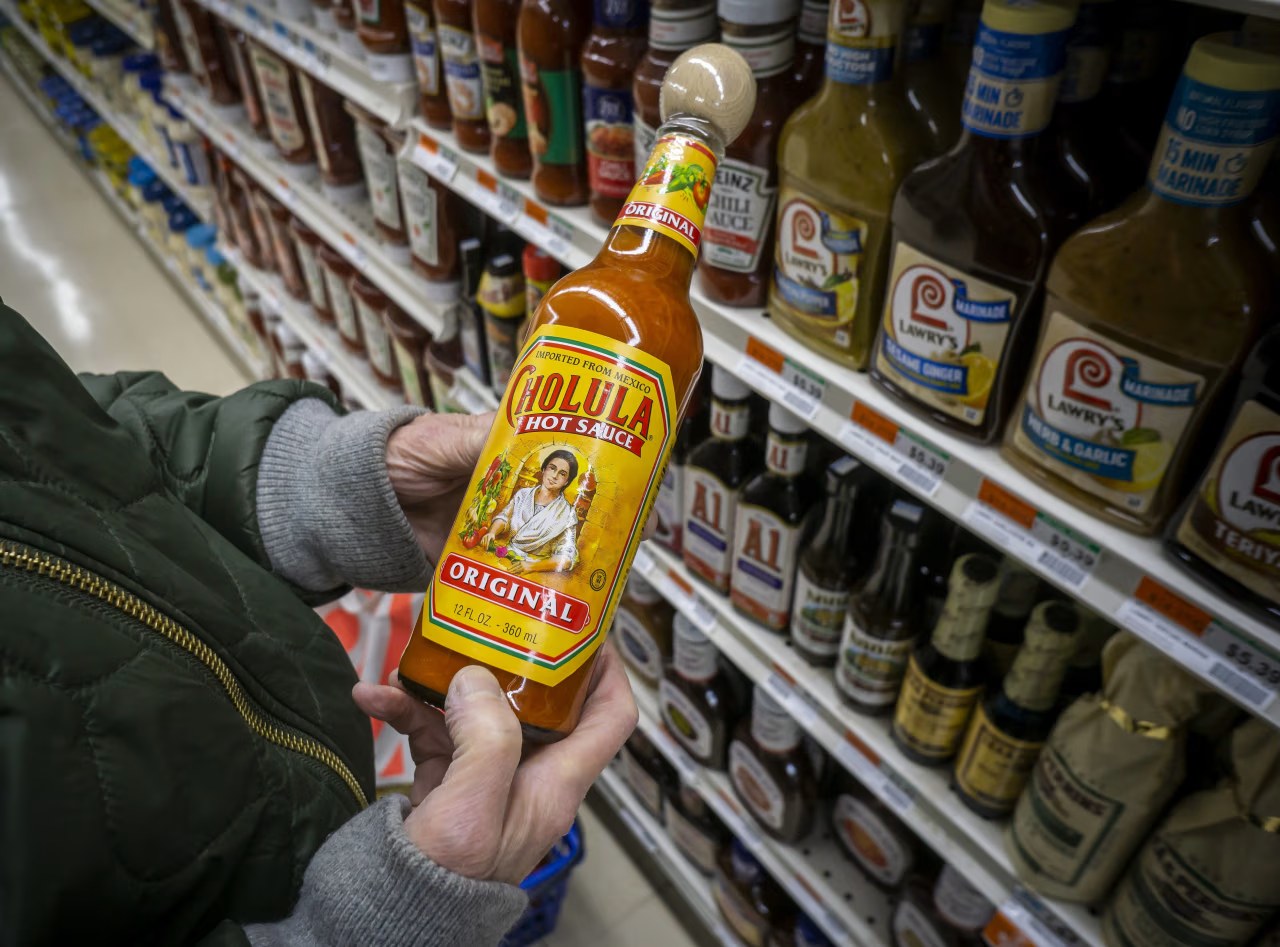
FOOD INDUSTRY—Running a big food company these days is like fishing in a dried‑up pond, writes the Wall Street Journal. After years of hiking prices without improving products, legacy giants such as General Mills, Campbell’s and Kraft Heinz are learning that there is little marginal growth left.
Volume has dried up as shoppers trade down to store brands or reach for a GLP‑1 prescription instead of a snack. The remaining excitement is being scooped up by upstarts that look fresher and healthier than the legacy brands gathering dust in the middle of the aisle.
Amid this backdrop, the pending McCormick‑Unilever merger promises to rewrite the rulebook, but the odds are stacked against any food mega‑merger that hopes to thrive without real product innovation.
The Historical Track Record of Food Mega-Mergers
A Legacy of Missed Synergies
Since 2010, the food sector has witnessed a parade of headline‑grabbing mega‑mergers, yet the post‑deal reality often falls short of expectations. In 2015, Kraft merged with Heinz in a $46 billion deal that promised cost savings of $1.5 billion; three years later, analysts at Morgan Stanley admitted the integration delivered only $800 million in synergies, well below the target (Bloomberg, 2023).
General Mills’ 2018 acquisition of Blue Buffalo for $8 billion was hailed as a move into the fast‑growing pet‑food niche. However, a Harvard Business Review analysis published in September 2022 found that General Mills’ pet‑food sales grew just 2% YoY, far lagging the 6% industry average, and the deal added $250 million in integration costs.
Even the 2020 merger of Nestlé with Atrium Innovations, a $2.5 billion transaction aimed at expanding plant‑based offerings, failed to meet its projected 5% revenue uplift, according to a Deloitte post‑deal review (2021). The pattern is consistent: large‑scale acquisitions rarely translate into the promised top‑line growth.
“Food M&A is a classic case of scale without relevance,” says Dr. David Zilberman, professor of agricultural economics at UC Davis, in an interview with the Harvard Business Review. “When consumer tastes are fragmenting, adding more brands rarely solves the core problem of stagnant volumes.”
The failure rate is stark: a Bloomberg‑compiled database of 27 U.S. food mega‑mergers between 2010 and 2023 shows that only six (22%) achieved their earnings‑growth targets within three years. The rest either missed forecasts or required write‑downs, eroding shareholder value.
These historical outcomes set a sobering backdrop for the McCormick‑Unilever deal. If past mergers have struggled to generate even modest synergies, what makes this one different? The next chapter examines the market forces that have squeezed legacy snack brands and created the current growth vacuum.
Market Saturation and Shrinking Snack Volumes
Why Shelf Space No Longer Guarantees Growth
U.S. snack‑category volume has been on a steady decline, a trend confirmed by Nielsen’s 2024 consumer‑insights report. Between 2022 and 2024, total snack volume fell 4.2%, even as the category’s dollar sales rose 1.5% due to price inflation. The report attributes the shrinkage to three forces: a surge in private‑label offerings, a health‑driven shift toward low‑carb alternatives, and the emergence of medical‑prescription appetite suppressants like GLP‑1 agonists that curb snacking altogether.
Statista’s market‑size data shows the U.S. packaged‑food market plateaued at $165 billion in 2023, up only 0.3% from the previous year. The snack segment, which once accounted for 15% of the total market, now hovers at 13% as consumers prioritize staple goods over discretionary treats.
“The snack aisle is essentially a dead‑end for growth,” notes Sarah Liu, senior analyst at Nielsen. “Brands that rely on volume expansion are forced to either innovate dramatically or accept market share erosion.” Liu’s assessment aligns with the Wall Street Journal’s observation that shoppers are “trading down to store brands or reaching for a GLP‑1 prescription instead of a snack.”
These dynamics explain why price hikes have become the default lever for legacy firms. With volume in retreat, companies such as General Mills (1.19% price increase), Campbell’s (1.19% increase) and Kraft Heinz (2.23% increase) have turned to modest shelf‑price adjustments in 2024, hoping to offset the volume loss.
However, the data suggests that price elasticity remains high; Nielsen’s price‑elasticity model estimates a 1% price rise reduces snack volume by roughly 0.8% in the current environment. Consequently, the incremental revenue from price hikes is quickly eaten away by the volume dip.
The shrinking volume landscape raises a pivotal question: can the McCormick‑Unilever merger, which promises to combine premium spice brands with a broad consumer‑goods portfolio, generate enough new demand to reverse the volume decline? The following chapter dives into the price‑vs‑innovation dilemma that legacy firms face.
Price Increases vs. Product Innovation: A Losing Battle?
When Raising Prices Fails to Boost the Bottom Line
In 2024, three of the industry’s biggest names—General Mills, Campbell’s and Kraft Heinz—collectively raised shelf prices by an average of 1.9%, according to Bloomberg’s pricing tracker. Yet the same data set reveals that none of these companies achieved sales‑growth rates above 0.5% in the quarter following the hikes.
General Mills reported a 1.19% price increase for its cereal portfolio, but its total cereal sales fell 1.4% YoY, a divergence highlighted in the company’s Q4 earnings release (2024). Campbell’s, after a 1.19% price bump on its soups and snacks, saw a 0.9% decline in net sales, while Kraft Heinz’s 2.23% price lift on condiments coincided with a 1.1% sales dip.
“Price increases alone cannot compensate for a market that is fundamentally shrinking,” says Michael Patel, senior market strategist at Bloomberg. “The elasticity in the snack and convenience categories is now so high that each percentage point of price rise translates into a near‑equivalent loss in volume.”
These figures echo the Wall Street Journal’s description of “hiking prices without improving products much.” The lack of product innovation—whether through healthier formulations, new flavors, or premium positioning—means that price is the only lever left, and it is increasingly blunt.
To illustrate the gap, a Bloomberg‑sourced bar chart compares the price‑increase percentages against the actual sales‑growth outcomes for the three firms. The visual starkly shows that higher price points have not delivered proportional revenue gains, underscoring the inefficacy of a price‑only strategy.
Given this backdrop, the McCormick‑Unilever merger’s touted focus on premium, flavor‑forward products could be a differentiator—if the combined entity can translate its expanded R&D capabilities into tangible new SKUs. The next chapter evaluates whether the strategic rationale behind the deal can overcome the structural headwinds that have plagued past mergers.
Could the McCormick‑Unilever Deal Rewrite the Playbook?
Strategic Fit or Scale for Scale?
The pending $60 billion merger between McCormick, the world’s leading spice maker, and Unilever, a consumer‑goods behemoth with a $58 billion revenue base, has been framed as a “flavor‑first” strategy to capture premium growth. McCormick’s CEO, Lawrence Kurzius, told investors in an April 2024 earnings call that the combined company would target “$12 billion in incremental revenue by 2027 through cross‑category innovation.”
McKinsey & Company’s 2023 Global Food & Beverage M&A outlook notes that only 18% of food‑sector mergers achieved double‑digit revenue growth within three years, largely because post‑deal integration distracts from product development. However, the McCormick‑Unilever pairing is unique: it merges a pure‑play flavor specialist with a diversified portfolio that includes ice‑cream, personal‑care and home‑care brands, potentially unlocking cross‑selling opportunities that prior deals lacked.
“If McCormick can embed its spice expertise into Unilever’s massive distribution network, there’s a real chance to create new high‑margin products,” says Elena García, partner at McKinsey’s Consumer Packaged Goods practice. “But the integration risk is still huge—cultural clashes and divergent growth mindsets could stall execution.”
To gauge market sentiment, a Bloomberg line chart tracks the number of announced food mega‑mergers per year from 2010 to 2023. The chart shows a modest uptick in 2021‑2022, followed by a sharp decline in 2023 as investors grew wary of overpaying amid volatile consumer demand.
Analysts at Goldman Sachs have already priced the deal at a 0.7× EBITDA premium, suggesting that the market is skeptical about the upside. Yet the potential synergies—particularly in the fast‑growing plant‑based and premium seasoning segments—could be significant if the combined R&D pipeline delivers.
Thus, while the historical odds are stacked against food mega‑mergers, the McCormick‑Unilever transaction brings a strategic alignment that may tip the scales. The final chapter explores what the next decade could hold for food consolidation if this deal succeeds—or fails.
What the Next Decade May Hold for Food Consolidation?
Scenario Planning for a Fragmented Market
Looking ahead, three scenarios dominate analyst forecasts for the U.S. food sector through 2034. The first—“Consolidation‑Driven Growth”—assumes that a handful of mega‑players, led by a successful McCormick‑Unilever integration, capture 45% of total market revenue by 2034, according to a Deloitte 2024 outlook.
The second scenario, “Health‑First Fragmentation,” projects that consumer demand for health‑focused, low‑sugar and plant‑based products will spur a wave of niche upstarts, keeping the market fragmented and limiting the upside of large mergers. Nielsen’s 2024 trend report estimates that health‑centric brands will command 22% of snack sales by 2025, up from 14% in 2022.
The third, “Regulatory Shock,” envisions stricter labeling and sugar‑tax policies that could erode margins for legacy giants, prompting a wave of divestitures rather than acquisitions. The European Union’s recent “Clean Label” directive, cited by the European Food Safety Authority, is an early indicator of this trajectory.
Expert opinion from Dr. Zilberman (UC Davis) underscores the importance of innovation: “Scale can only buy you so much. The companies that survive will be those that continuously reinvent their product lines to meet evolving health and sustainability standards.”
To illustrate the competitive landscape, a table compares the 2024 financials of the top five U.S. packaged‑food companies, highlighting revenue, net income, P/E ratios and estimated litigation exposure—a factor that has increasingly weighed on M&A decisions.
Should the McCormick‑Unilever merger deliver on its $12 billion revenue promise, it could set a new benchmark for flavor‑centric growth, encouraging other niche players to seek similar scale. Conversely, a misstep could reinforce the historical narrative that food mega‑mergers rarely work, prompting investors to favor organic growth and strategic partnerships over outright acquisitions.
In any case, the next decade will test whether the industry can break free from the cycle of price‑driven, volume‑starved strategies that have defined the past ten years.
Frequently Asked Questions
Q: Why have past food mega‑mergers struggled to deliver growth?
Most large food mergers have failed to generate the promised synergies because market saturation, stagnant snack volumes, and price‑driven competition erode any incremental revenue.
Q: What does the data say about U.S. snack‑category volume trends?
Nielsen data shows a 4.2% decline in total snack volume between 2022 and 2024 as shoppers shift to store brands or health‑focused alternatives like GLP‑1‑prescribed meals.
Q: Could the McCormick‑Unilever merger be an outlier?
Analysts argue the deal’s focus on premium spices and plant‑based products may sidestep the usual pitfalls, but execution risk remains high amid a compressed growth landscape.
