Mark Zuckerberg’s 2024 Prada Appearance Signals $2.4 Trillion Tech-Fashion Convergence
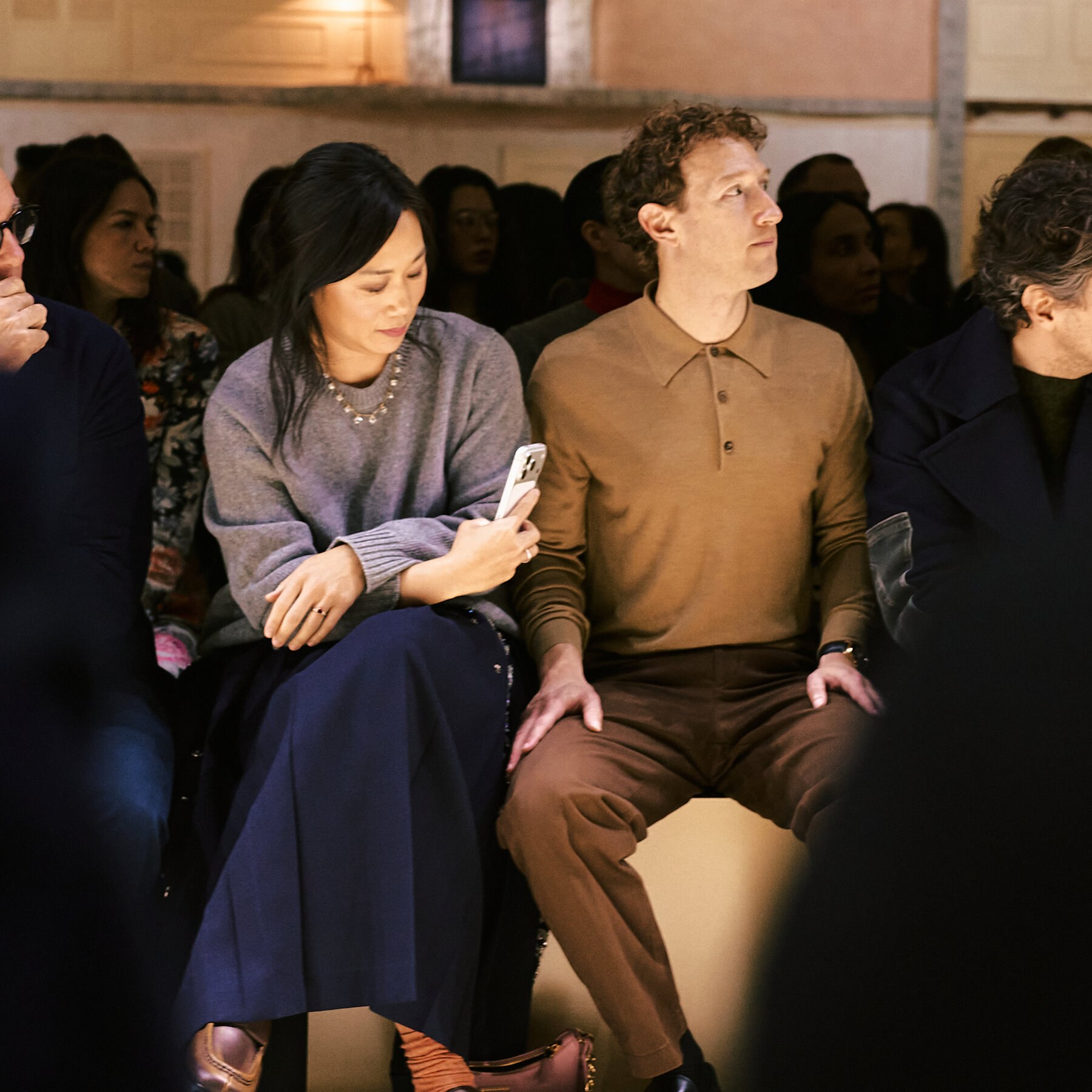
- Mark Zuckerberg and Priscilla Chan occupied prime front-row seats at the Milan Prada show.
- His presence alongside Lorenzo Bertelli, Prada’s Chief Merchandising Officer, highlights growing tech-fashion synergy.
- This event occurred shortly after Zuckerberg faced scrutiny in a social media addiction hearing.
- The appearance suggests a strategic engagement with luxury fashion, potentially linked to Meta’s AI and Smart Glasses initiatives.
Beneath the Glamour, a Strategic Power Play Unfolds in Milan
MARK ZUCKERBERG—MILAN – The front row of the Prada Fall/Winter 2024 fashion show in Milan on Thursday was a study in calculated anticipation, a tableau of the fashion elite awaiting a final, significant arrival. Amidst the presence of stars like Carey Mulligan, Sarah Pidgeon, Caitlin Clark, and Eileen Gu, the true headline was the meticulously orchestrated entrance of Meta CEO Mark Zuckerberg and his wife, Priscilla Chan. Their arrival, managed with the precision of a presidential detail and ushered in by handlers alongside Anna Wintour and Eva Chen, the director of fashion partnerships at Instagram, signaled more than just a celebrity endorsement; it pointed to a deepening nexus between Silicon Valley’s technological ambitions and the high-stakes world of luxury fashion.
This wasn’t merely a casual celebrity appearance. The phalanx of unsmiling, imposing guards guarding vacant seats underscored Zuckerberg’s status and his perceived desire to avoid casual interaction, even within the exclusive $5,000-plus handbag-holding demimonde of a major fashion week. The couple eschewed the typical celebrity ritual of posing for photographers, preferring a more private, controlled presence. Their attendance, particularly Zuckerberg’s, has ignited speculation about Meta’s burgeoning interest in wearable technology, artificial intelligence, and how these cutting-edge innovations might be integrated into the very fabric of personal style and luxury branding, a sector valued in the hundreds of billions globally.
The implications of Zuckerberg’s presence extend far beyond the runway. His recent sartorial shifts, from designer hoodies to custom Amiri t-shirts and a notable shearling coat, suggest a personal evolution that mirrors Meta’s strategic pivot toward integrating technology with everyday life. While not sporting Meta’s latest Ray-Ban smart glasses at the show, many attendees drew a direct line between his attendance and the company’s significant investment in augmented reality and AI-driven devices, including Meta Lab stores now operating in key U.S. locations like Hawaii and California. This convergence represents a significant strategic play, potentially shaping the future of how consumers interact with both technology and high fashion in an increasingly connected world.
The Tech Titan Takes Milan: A Strategic Front-Row Seat
The buzz in Milan on Thursday wasn’t solely about Miuccia Prada’s latest designs; it was significantly amplified by the presence of Mark Zuckerberg, the chief executive of Meta Platforms. His arrival at the Prada show, alongside his wife Priscilla Chan, was a carefully managed event, complete with security detail and a direct escort to prime front-row seating. This level of attention for a tech mogul at a fashion event, typically reserved for A-list actors or musicians, immediately sparked conversation. The vacant seats were guarded by imposing figures, creating an aura of importance around Zuckerberg’s eventual entrance, a stark contrast to the more relaxed mingling often seen amongst fashion’s elite. His wife, Priscilla Chan, was impeccably dressed in a classic Prada ensemble—a demure gray sweater, a flowing navy skirt, and platform loafers—while Zuckerberg opted for a more conventional, yet elevated, tan long-sleeve polo shirt and brown trousers, a departure from his well-documented affinity for gray hoodies.
A Calculated Appearance Amidst Tech’s Evolving Landscape
Zuckerberg’s foray into the fashion world isn’t entirely new. His recent public appearances have hinted at a growing appreciation for style beyond utilitarian tech-wear. He previously garnered attention from publications like British GQ for donning a prominent shearling coat and has commissioned bespoke Latin-phrased T-shirts from designer Mike Amiri. These instances, coupled with his attendance at a high-profile luxury fashion show, suggest a deliberate effort to engage with aesthetics and personal branding in a more pronounced way. The security surrounding his arrival underscored a business-like approach, indicating a lack of interest in casual celebrity schmoozing, even among the well-heeled attendees. Chan, during the show, was observed pointing out specific outfits to her husband, offering glimpses into their shared engagement with the collection, while Zuckerberg maintained a posture described as ‘legs spread wide,’ a subtle but noted detail in his otherwise composed demeanor.
The implications of Zuckerberg’s presence at Prada are multifaceted. His attendance, occurring merely a week after facing rigorous questioning in a landmark Senate hearing concerning social media addiction and its impact on young users, presents a striking contrast. While the U.S. Senate hearing focused on the societal costs of Meta’s platforms, the Milan runway offered what appeared to be a more congenial environment. This juxtaposition highlights the varied arenas in which tech leaders now operate and the diverse strategies they employ to shape public perception and business relationships. The strategic nature of his presence hints at a broader initiative by Meta to bridge the gap between cutting-edge technology and the established world of luxury goods, potentially exploring new avenues for growth and influence in sectors previously considered disparate.
The meticulous execution of his entrance and seating arrangement, far from being just a matter of celebrity, points to a deliberate cultivation of relationships within the fashion industry. As the show concluded, Zuckerberg and Chan did not join Miuccia Prada and Raf Simons backstage, further emphasizing their detached, observational role rather than an overt participation in the typical fashion establishment mingling. This strategic distance suggests a focused objective for their attendance, one that likely aligns with Meta’s long-term vision for technology’s integration into consumer lifestyles, potentially setting the stage for future collaborations or product integrations that blur the lines between digital innovation and tangible luxury. The seeds of this convergence, sown in Milan, are poised to influence the intersection of technology and fashion for years to come.
The Smart Glasses Gambit: Prada’s Seatmate and Meta’s Vision
The seating chart at a high-stakes fashion event like Prada’s is rarely accidental. Mark Zuckerberg’s placement next to Lorenzo Bertelli, the son of Miuccia Prada and the Chief Merchandising Officer of the Prada Group, was perhaps the most significant indicator of the subtext beneath Zuckerberg’s attendance. Bertelli, a key figure in shaping Prada’s product strategy, has been vocal about the importance of integrating emerging technologies, particularly artificial intelligence, into the luxury market. His close proximity to the CEO of Meta, a company pushing the boundaries of AI and augmented reality, strongly suggested a dialogue about the future of wearables and their place in high fashion. While Zuckerberg wasn’t wearing Meta’s latest camera-enhanced Ray-Ban smart glasses, their presence was palpable in the minds of many observers, given Meta Lab stores, selling these AI glasses, have recently opened in locations including Hawaii, California, Nevada, and New York. These stores represent Meta’s significant investment in making its smart glasses accessible and desirable, moving them from niche gadgets to potential mainstream fashion accessories.
Bridging Worlds: AI, Fashion, and the Future of Wearables
The assumption that Zuckerberg’s presence was tied to Meta’s ambitious smart glasses project gained considerable traction from this seating arrangement. Prada, as a globally recognized luxury brand, represents a potential gateway for Meta to embed its technology within the high-fashion ecosystem. Lorenzo Bertelli’s past statements emphasize a forward-looking approach, where technology, including AI, is not just an enabler but a core component of future product development and consumer experience in luxury. The fact that he engaged in conversations with Zuckerberg during the show further fueled speculation about potential collaborations or strategic alignments. This wasn’t just about attending a show; it was about fostering a connection between two titans of different industries, each influential in their own right, to explore synergies that could redefine consumer engagement and product design.
The implications of this potential tech-fashion alliance are profound. For Meta, partnering with a brand like Prada could lend significant cultural cachet to its smart glasses and other wearable technologies, moving them beyond purely functional devices to statement pieces. For Prada, embracing such technology could offer new avenues for innovation, potentially creating augmented shopping experiences, integrating digital functionalities into garments, or enhancing brand storytelling through immersive technologies. The economic stakes are immense; the global luxury goods market is valued at hundreds of billions of dollars, and the wearable technology market is also experiencing exponential growth. A successful integration could unlock significant new revenue streams and market share for both entities. Lorenzo Bertelli’s emphasis on AI specifically points to the advanced capabilities Meta is developing, suggesting a future where smart glasses offer more than just notifications—they could provide real-time information, personalized experiences, and seamless interaction with the digital and physical worlds, all while being fashion-forward.
The recent launch of Meta Lab stores, with their focus on showcasing AI-powered glasses, demonstrates Meta’s commitment to this vision. By opening these dedicated retail spaces in key markets, Meta is actively creating environments where consumers can experience and purchase these advanced devices. The strategic placement of these stores, from the relaxed environments of Hawaii to the trendsetting hubs of California and Nevada, indicates a broad market approach. Zuckerberg’s deliberate presence at a show like Prada, seated next to a key executive driving technology integration at a luxury house, is a powerful signal that the future of fashion may well be interwoven with the advancements pioneered in Silicon Valley, particularly in the realm of artificial intelligence and augmented reality. This strategic positioning suggests that the conversation has moved beyond theoretical possibilities to concrete plans for how technology will be worn, experienced, and desired in the coming years.
Meta Lab Store Openings
Source: Meta Platforms Q1 2024 Earnings Call
Beyond the Runway: Zuckerberg’s Post-Hearing Optics and Fashion’s Influence
Just days before his appearance at Milan Fashion Week, Mark Zuckerberg found himself in the unenviable position of testifying before a U.S. Senate committee in Washington D.C. The hearing, which focused intensely on issues of social media addiction and its profound impact on young people, saw Zuckerberg facing sharp questioning from lawmakers. Senators pressed him on Meta’s responsibility, algorithmic amplification, and the mental health consequences linked to platforms like Instagram and Facebook. He acknowledged that Meta had a responsibility to protect young people and stated that the company was investing heavily in AI to combat harmful content and to create safer online experiences. This high-stakes testimony, aimed at assuaging public and governmental concerns, painted a picture of a tech executive grappling with the societal ramifications of his company’s vast digital empire. The contrast between this intense legislative scrutiny and the ostensibly more relaxed, yet equally strategic, environment of a Prada fashion show is stark and speaks volumes about the complex public relations landscape in which tech leaders now operate.
From Capitol Hill to Catwalk: Navigating Perceptions
Zuckerberg’s attendance at the Prada show, particularly his seating next to Lorenzo Bertelli, the Chief Merchandising Officer of Prada, and his previous fashion-forward choices like the shearling coat and Amiri t-shirts, could be interpreted as a strategic effort to recalibrate his public image. Following the rigorous questioning about his company’s negative societal impacts, a high-profile appearance in the world of luxury fashion offers a different narrative. It positions him not just as a controversial tech CEO, but as a figure engaged with culture, aesthetics, and potentially, the future of how technology integrates into lifestyle products. This strategic optics play is not uncommon in the corporate world, especially when a company, like Meta, is facing intense regulatory pressure and needs to demonstrate a broader, more positive vision. The fashion industry, with its inherent global reach and aspirational appeal, provides a powerful platform for such image management, offering a stark counterpoint to the often-critical discourse surrounding Big Tech’s influence.
The implications of this dual presence—one in the halls of power and the other at a global fashion capital—are significant for both Meta and the fashion industry. For Meta, it’s an opportunity to associate its brand with sophistication and trendsetting, potentially softening its image and appealing to a demographic that values both technology and luxury. For the fashion industry, particularly brands like Prada, engaging with tech leaders like Zuckerberg can signal an embrace of innovation and a forward-thinking approach. Lorenzo Bertelli’s expressed interest in emerging technologies like AI further solidifies this connection, suggesting that fashion houses are increasingly looking to technology for future growth and differentiation. The economic landscape here is substantial; the global luxury goods market is projected to reach over $500 billion by 2025, while the wearable tech market is also expanding rapidly, creating fertile ground for convergence. The interaction between these two sectors, underscored by Zuckerberg’s Milan visit, could lead to lucrative partnerships and new product categories.
The recent opening of Meta Lab stores across states like Hawaii, California, and Nevada, specifically to showcase and sell AI-powered smart glasses, demonstrates a tangible commitment to this intersection of technology and consumer lifestyle. These retail spaces serve as testing grounds for how consumers interact with and adopt wearable AI. Zuckerberg’s presence at Prada, shortly after a challenging congressional hearing, can be seen as a calculated move to broaden his company’s appeal and to highlight its engagement with areas beyond the controversies of social media. This strategic diversification of narrative, moving from Capitol Hill to the catwalk, suggests a sophisticated understanding of public perception and a proactive approach to shaping Meta’s brand identity in the years ahead. The visibility gained in Milan could serve to counterbalance the negative press, positioning Meta as an innovator not just in digital communication but also in the future of personal technology and style.
The narrative woven by Zuckerberg’s attendance—from addressing senators on Capitol Hill regarding the societal impact of social media to sitting front row at a prestigious fashion show in Milan—illustrates a complex strategy of engagement and image management. His recent fashion choices, including a notable shearling coat and custom Amiri t-shirts, signal a personal evolution that aligns with Meta’s broader business aspirations. This shift is not merely superficial; it coincides with the company’s significant investment in AI and wearable technology, exemplified by the rollout of Meta Lab stores. The contrast between the intense scrutiny of a congressional hearing and the aspirational allure of Milan Fashion Week highlights the multifaceted challenges and opportunities faced by tech leaders in shaping public perception and fostering new market avenues. As fashion and technology continue to intertwine, Zuckerberg’s strategic appearances are likely to become more frequent, signaling a new era of collaboration and influence that extends far beyond the digital realm.
Growth of Global Luxury Goods Market
Source: Market Research Reports
Fashion Shows as Business Arenas: Prada’s Strategic Mix
The traditional notion of a fashion show as solely a presentation of clothes is rapidly evolving, particularly for multinational luxury houses like Prada. The presence of Mark Zuckerberg at their recent Milan show underscores this shift, transforming the runway into a strategic business arena where technology, commerce, and culture converge. Prada, under the creative direction of Miuccia Prada and Raf Simons, has long been a bellwether for cultural trends, but its business model now extends far beyond apparel. The company’s operations encompass a broad spectrum of luxury goods, marketing, retail, and increasingly, the integration of new technologies. Lorenzo Bertelli’s role as Chief Merchandising Officer places him at the nexus of product development, brand strategy, and technological adoption, making his interactions with tech leaders like Zuckerberg particularly telling. His outspoken advocacy for technologies such as AI signals Prada’s commitment to staying at the forefront of innovation, not just in design but in business operations and consumer engagement.
Beyond the Runway: Prada’s Multifaceted Business Model
The strategic value of having a figure like Zuckerberg seated alongside Bertelli cannot be overstated. It signifies a recognition by major fashion brands that their future success is increasingly intertwined with technological advancements. Prada’s business, like many luxury conglomerates, is increasingly leveraging data analytics, e-commerce, and digital marketing to reach global audiences. The potential for AI, as highlighted by Bertelli, could revolutionize aspects from supply chain management and personalized customer experiences to the very creation of digital fashion and virtual showrooms. The conversations between Zuckerberg and Bertelli likely touched upon these areas, exploring how Meta’s expertise in AI and augmented reality could intersect with Prada’s established luxury brand equity. This represents a departure from traditional fashion industry norms, where the focus was primarily on design and craftsmanship, to a more integrated approach where technology plays a pivotal role in brand growth and market penetration.
The implications of fashion shows becoming business hubs are profound for the industry. They serve not only to showcase collections but also as high-visibility platforms for forging strategic alliances, attracting investment, and demonstrating a brand’s forward-thinking vision. For Prada, engaging with Meta’s CEO could lead to collaborations on augmented reality experiences for shoppers, the development of digital assets for the metaverse, or even co-branded wearable technology that fuses high fashion with advanced functionality. The economic context is crucial: the luxury market is fiercely competitive, and innovation is key to maintaining market leadership. By embracing technology, brands like Prada aim to capture the attention of younger, tech-savvy consumers while simultaneously enhancing the exclusive appeal that defines luxury. This integration allows for new revenue streams and deeper customer loyalty in an evolving digital economy, where physical products are increasingly complemented by digital experiences.
Zuckerberg’s presence, flanked by fashion icons and seated next to a proponent of technological integration within luxury, frames the Prada show as more than just a fashion event; it’s a snapshot of the evolving business landscape. His wife, Priscilla Chan, herself an influential figure, also observed the proceedings, adding another layer of strategic significance. While they didn’t engage in backstage mingling, their deliberate participation in the front-row discourse signals a powerful alignment of interests. The narrative emerging is one of proactive adaptation, where established luxury houses are actively seeking partnerships with tech giants to navigate the future. This strategic intersection between Silicon Valley innovation and Milanese haute couture demonstrates a clear understanding that the future of luxury consumption will be shaped by a seamless blend of the physical and digital, driven by advanced technologies like AI. This forward-looking approach is essential for brands aiming to remain relevant and dominant in the 21st-century global marketplace.
Key Initiatives at Fashion Houses Embracing Technology
Source: Industry Analysis and Company Reports
What’s Next? The Unfolding Convergence of Tech and Style
Mark Zuckerberg’s conspicuous presence at the Prada show in Milan, seated beside Lorenzo Bertelli, the scion and business leader of the luxury house, serves as a potent symbol of an accelerating trend: the deep integration of technology into the fashion industry. This wasn’t merely a celebrity endorsement; it was a strategic engagement, playing out on a global stage shortly after Zuckerberg navigated a high-stakes congressional hearing on social media’s societal impact. The implications are far-reaching, suggesting that the lines between wearable technology, artificial intelligence, and high fashion are becoming increasingly blurred. Meta’s ongoing investment in AI-powered smart glasses, exemplified by its Meta Lab stores in locations like Hawaii and California, signals a deliberate push to make these devices not just functional but fashionable. The whispers in Milan were about more than just silk and leather; they were about algorithms and augmented reality.
The Road Ahead: From Smart Glasses to Digital Couture
The strategic positioning of Zuckerberg next to Bertelli highlights the critical role of figures like him in championing technological adoption within established luxury brands. Bertelli’s public emphasis on the importance of AI foreshadows a future where technology is woven into the very fabric of high fashion. This could manifest in numerous ways: smart garments that monitor health, accessories that offer seamless digital interaction, or entirely new forms of digital couture for the metaverse. The economic significance is undeniable. The luxury goods market, valued in the hundreds of billions, is ripe for disruption and enhancement through technological innovation, while the wearable tech market continues its exponential growth. Partnerships between tech giants and fashion houses could unlock unprecedented revenue streams and redefine consumer experiences, creating a synergistic ecosystem where physical and digital luxury coexist and enhance each other.
The broader implications extend to how brands will engage with consumers. As Meta continues to refine its AI capabilities and wearable hardware, the potential for personalized shopping experiences, immersive virtual try-ons, and digitally enhanced storytelling becomes increasingly tangible. Prada, by engaging with these concepts, positions itself not just as a purveyor of exclusive clothing but as a forward-thinking entity embracing the future of consumerism. This aligns with a growing consumer base that expects seamless integration of technology into all aspects of their lives, including their style choices. The economic models are shifting, too, with opportunities arising in digital fashion, virtual goods, and subscription services that blend physical and digital offerings, a landscape Meta is actively shaping.
Looking forward, the convergence witnessed in Milan is likely to accelerate. We can anticipate more collaborations, more Fashion Tech startups attracting venture capital—potentially reaching figures like the $2.4 trillion projected for the broader tech industry—and a greater emphasis on research and development at the intersection of these fields. Zuckerberg’s recent sartorial evolution, from hoodies to designer pieces, and his company’s significant investments in AI and wearables, indicate a long-term strategy. The fashion industry, traditionally driven by aesthetics and craftsmanship, is now increasingly influenced by data, algorithms, and user experience. This synergy is not a fleeting trend but a fundamental reshaping of how products are designed, marketed, and consumed, promising a future where technology and style are intrinsically linked, creating new forms of value and expression for consumers worldwide.
Source: Industry Analyst Projections
Frequently Asked Questions
Q: Why was Mark Zuckerberg at the Prada fashion show?
Mark Zuckerberg attended the Prada show in Milan with his wife, Priscilla Chan, in a front-row seat. His presence, accompanied by Instagram’s Director of Fashion Partnerships Eva Chen and sitting next to Lorenzo Bertelli, suggests a potential link between Meta’s technology initiatives and the luxury fashion industry.
Q: What is the connection between Meta and the fashion industry?
Meta, under Mark Zuckerberg’s leadership, is increasingly exploring the intersection of technology and fashion. This includes the development and sale of AI-powered smart glasses and the establishment of Meta Lab stores, indicating a strategic interest in how technology can influence or integrate with personal style and luxury brands.
Q: How does AI play a role in this fashion tech convergence?
AI is central to Meta’s strategy, particularly with its advanced smart glasses. Lorenzo Bertelli, Miuccia Prada’s son and Prada’s Chief Merchandising Officer, has also publicly emphasized the importance of emerging technologies like AI. Their seating arrangement at Prada highlights the growing dialogue between tech leaders and fashion houses concerning AI’s future applications.
Q: What are Mark Zuckerberg’s recent fashion interests?
Mark Zuckerberg has recently shown a more conspicuous interest in fashion, diverging from his typical tech-bro attire. He has been noted for wearing a shearling coat and commissioning custom t-shirts from designer Mike Amiri. This shift suggests a personal engagement with style that parallels Meta’s broader business interests.
