Xiaomi Net Profit Falls as Memory Costs Erase 36.3B-Yuan EV Sales Surge
- Smart-EV quarterly revenue more than doubled to 36.3 billion yuan on higher deliveries and prices.
- Net profit slumped after memory-chip inflation outpaced Xiaomi’s ability to raise handset prices.
- Shares have dropped for six consecutive months amid investor fears over China consumer slowdown.
- Margin pressure underscores broader headwinds across smartphones, IoT, and EV ecosystems.
Beijing-based tech giant faces component-cost squeeze in world’s largest handset market
XIAOMI EARNINGS—Xiaomi’s headline numbers tell two clashing stories: its smart-electric-vehicle division is accelerating faster than most start-ups, yet the Chinese conglomerate still posted a sharp quarterly profit decline because surging memory-chip prices ate into the razor-thin margins of its core smartphone business.
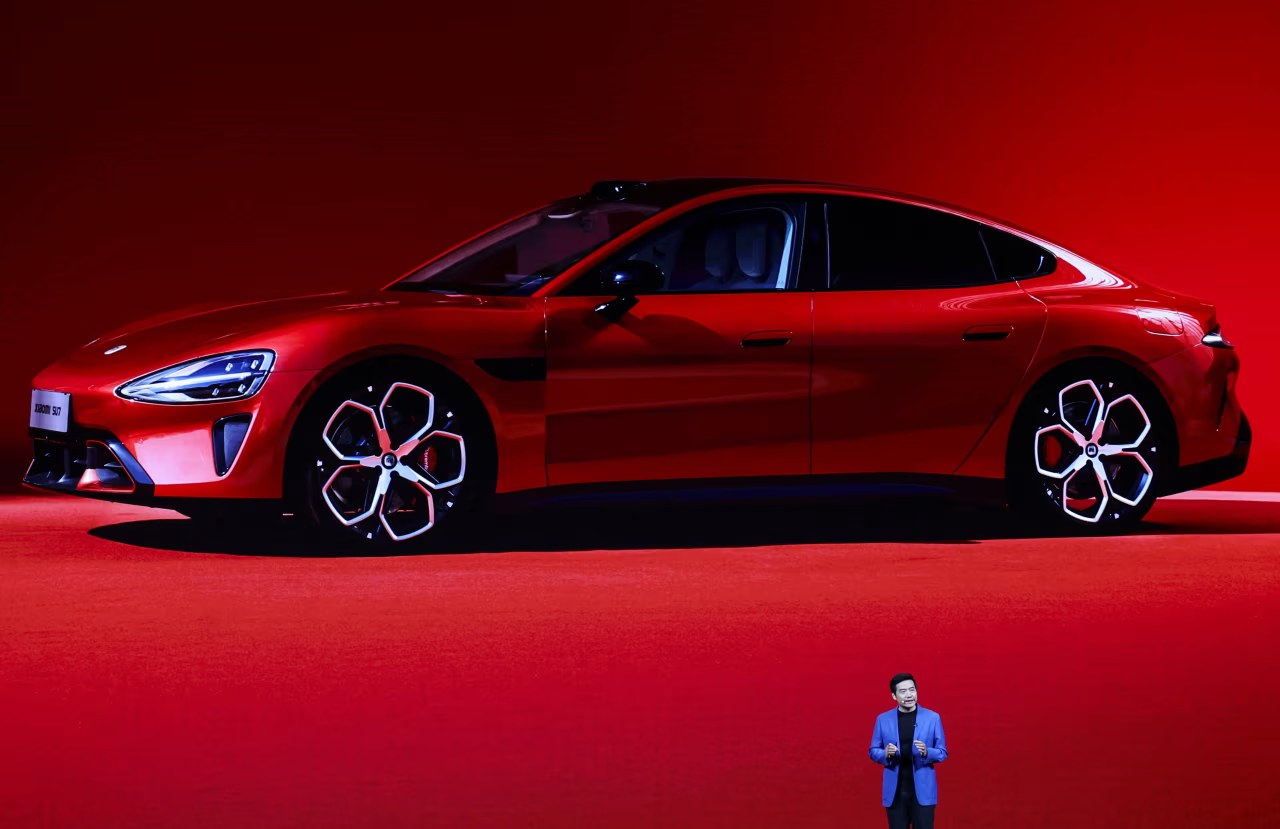
The earnings release, issued after Hong Kong trading closed, shows revenue from smart EVs climbing above 36 billion yuan for the first time—more than double the year-earlier figure—thanks to a production ramp at its Beijing auto plant and richer trim mixes on the SU7 sedan. But that victory was eclipsed by a memory-market rally that has pushed DRAM contract prices up roughly 40 % since January, a spike suppliers have largely passed downstream to handset makers.
With China’s post-pandemic consumption still fragile, Xiaomi chose to absorb most of the increase rather than risk losing price-sensitive buyers, a decision that compressed gross margin and dragged net profit below consensus estimates. The stock, already down 28 % over the prior six months, extended losses in after-hours trading as analysts questioned when component relief might arrive.
Smart-EV Revenue Doubles, Yet Profit Sinks Under Memory-Chip Weight
Xiaomi’s smart-electric-vehicle unit delivered the quarter’s standout metric: revenue of 36.3 billion yuan, up from roughly 17 billion yuan a year earlier, driven by a 60 % sequential jump in vehicle deliveries and a 12 % rise in average selling price after the company introduced a premium all-wheel-drive variant of the SU7. The topline surge positions the three-year-old auto division as Xiaomi’s fastest-growing segment, eclipsing both smartphones and IoT home devices on a percentage basis.
Memory inflation wipes out EV gains at group level
Yet consolidated net profit still fell sharply because the smartphone division—still 56 % of total revenue—could not pass on ballooning memory costs. Industry tracker TrendForce reports that 8 GB LPDDR5 modules have risen 38 % since January, while 256 GB NAND flash packages added 22 %. Xiaomi CFO Alain Lam told analysts the company “chose market-share defence over short-term margin protection,” a phrase that translates into a 310-basis-point decline in handset gross margin to 11.4 %, the lowest level since the company went public in 2018.
The squeeze underscores a structural challenge for China’s consumer-electronics leaders: even when they diversify into high-growth arenas such as EVs, legacy businesses remain vulnerable to global component cycles. Counterpoint Research associate director Brady Wang notes that Xiaomi’s handset bill-of-materials for a flagship model now allocates 38 % to memory, up from 27 % a year ago, leaving scant room for R&D or marketing without risking sticker-shock at retail.
Looking ahead, Xiaomi has guided investors to expect another quarter of margin pressure, citing long-term supply agreements signed when prices were still climbing. Management reiterated a target of 120 000 SU7 deliveries this year, but warned that auto profitability—currently breakeven on a per-unit basis—could also erode if lithium carbonate rebounds above 150 000 yuan per tonne. The net result is a consensus 2024 earnings estimate that has fallen 19 % in the past 90 days, according to Visible Alpha.
How Memory-Chip Prices Became Xiaomi’s Biggest Margin Enemy
Memory-chip inflation is hardly unique to Xiaomi, but the Beijing-based company feels the sting more acutely because 71 % of its handset shipments are sub-$400 models where component costs dominate the bill-of-materials. Over the past two quarters, Samsung and SK hynix have shifted capacity toward high-margin server DRAM, tightening supply for mobile modules just as Xiaomi was preparing to launch its Redmi Note 14 series ahead of Singles’ Day shopping festival.
Contract prices surge 40 % in six months
DRAMeXchange data show that spot prices for 8 GB LPDDR5 chips rose from $2.40 in February to $3.35 in late May, a 39.6 % increase that suppliers justified by citing higher wafer fabrication costs and renewed inventory restocking by global brands. Xiaomi, which typically negotiates quarterly supply contracts, locked in shipments at the peak, leaving little flexibility when consumer demand softened after the May holiday period.
According to IDC analyst Bryan Ma, Xiaomi’s memory procurement cycle is “about six weeks behind Samsung and Apple,” a lag that forces the company to accept prevailing spot rates rather than the discounted long-term agreements enjoyed by larger rivals. The resulting cost disadvantage equates to roughly $23 per handset, enough to erase the entire operating margin on the volume-driving Redmi A series.
Management has responded by accelerating a shift toward in-house power management chips and custom imaging ISPs, but these components account for barely 8 % of bill-of-materials, insufficient to offset memory headwinds. Analysts at Nomura estimate that every 10 % rise in DRAM prices slices 140 basis points from Xiaomi’s consolidated gross margin, a sensitivity that explains why investors sold the stock despite the EV division’s record quarter.
China’s Spending Slump Amplifies Xiaomi’s Pricing Dilemma
Beyond component costs, Xiaomi must navigate the weakest consumer-electronics cycle in China since 2015. Government data show nationwide mobile-phone retail sales fell 7.9 % in the first five months, while online handset volumes on JD.com declined 11 % year-over-year during the June 18 mid-year shopping festival, traditionally a barometer for mid-tier demand.
Sub-$400 segment bears the brunt
Xiaomi’s domestic shipments are heavily skewed toward the Redmi line, where average selling prices hover around 1 300 yuan ($180). With youth unemployment officially at 14.7 % and household savings rates climbing, consumers are extending replacement cycles beyond 30 months, the longest interval on record, according to China Academy of Information and Communications Technology.
The company attempted to raise prices on entry-level models by 5–7 % in April, but weekly sell-through data from Counterpoint show unit sales dropped 18 % in the four weeks following the hike, forcing regional distributors to reinstate promotional discounts. The net effect was a 2 % year-over-year decline in domestic smartphone revenue despite a 4 % increase in handset average selling price, illustrating the limits of pricing power in a deflationary mindset.
Looking forward, Xiaomi is pinning hopes on government consumption subsidies expected later this year, as well as a broader China economic rebound forecast by the IMF at 4.6 % GDP growth. Yet with memory costs still elevated and 5G penetration past the 80 % mark, analysts at Bernstein expect handset volumes to remain flat through 2025, leaving EVs as the primary growth lever.
Can Xiaomi’s EV Momentum Offset Handset Margin Pain?
While smartphones struggle, Xiaomi’s automotive foray is exceeding internal milestones. The SU7 sedan, launched last September, reached 100 000 cumulative deliveries in under nine months, faster than Tesla’s Model 3 ramp in China. Gross margin per vehicle turned positive last quarter at 1.2 %, helped by a richer mix that saw 65 % of buyers opt for the 299 900-yuan Pro trim versus the base 215 900-yuan version.
Auto breakeven hinges on scale and lithium prices
CEO Lei Jun told analysts the auto division can reach 5 % vehicle margin once monthly output hits 15 000 units, a threshold expected by December. That target, however, assumes lithium carbonate remains below 120 000 yuan per tonne; spot prices on the Guangzhou Futures Exchange have already rebounded to 118 000 yuan from a low of 85 000 yuan in March.
Xiaomi has hedged roughly 40 % of Q4 lithium needs through forward contracts at an average 110 000 yuan, but full-year sensitivity analysis shows every 10 000 yuan increase trims auto gross margin by 90 basis points. With plans to launch a mass-market SU5 crossover next spring, the company must balance affordability against volatile raw-material markets.
More importantly, EV success has yet to move the profit needle at group level. Smart EVs contributed only 8 % of total revenue this quarter; even assuming 20 % segment growth and 5 % margin, analysts at HSBC estimate autos would add just 1.8 billion yuan to operating profit—enough to offset only one-third of the handset margin erosion caused by memory inflation.
What Comes Next: Cost Relief or Further Margin Erosion?
Xiaomi has guided for a gradual margin recovery in the second half if memory-chip contracts roll over, but suppliers remain cautious on capacity expansion. Samsung signaled it will keep mobile DRAM output flat through 2025, while Micron warned that high-bandwidth memory for AI servers will continue to cannibalize commodity wafer starts. Analysts at TrendForce expect mobile DRAM prices to fall 8–12 % in Q4, yet that relief may arrive too late to rescue 2024 earnings.
Investors await evidence of sustainable diversification
Morgan Stanley’s Tim Zhao notes that Xiaomi’s valuation—now 0.9× price-to-sales versus a three-year average of 1.3×—already embeds a gloomy handset outlook, meaning any moderation in memory costs could trigger a sharp re-rating. Conversely, if EV margins slip below zero on lithium upside, the company risks a two-front margin squeeze.
Management has promised to update capital-allocation priorities in September, with options ranging from a share-buyback revival to incremental auto-capacity expansion. Until then, all eyes will be on monthly China retail sales and spot lithium prices as the twin variables that decide whether Xiaomi’s EV success story can truly offset the memory-chip pain.
Frequently Asked Questions
Q: Why did Xiaomi’s quarterly profit fall despite higher EV sales?
Memory-chip prices surged faster than Xiaomi could raise handset prices, compressing gross margin and dragging net profit down even as smart-EV revenue more than doubled to 36.3 billion yuan.
Q: How much did Xiaomi’s smart-EV revenue grow this quarter?
Revenue from smart electric vehicles more than doubled to 36.3 billion yuan, lifted by both higher vehicle deliveries and increased average selling prices.
Q: What headwinds are hitting Xiaomi beyond memory costs?
Subdued consumer spending inside China and a six-month share-price decline reflect broader weakness in the world’s largest handset market, amplifying margin pressure from component inflation.
